

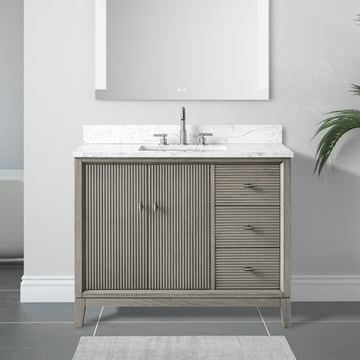








A compact bathroom doesn't have to feel cramped or cluttered. With the right vanity layout, even the tightest floor plan can function beautifully and look intentional. Whether you're working with a 40-square-foot powder room or a narrow full bath, these small bathroom vanity ideas will help you make smart decisions about space, storage, and style—without tearing down walls.
1. Go Floating to Free Up Floor Space
A wall-mounted vanity is one of the single most effective upgrades you can make in a small bathroom. By lifting the cabinet off the floor, you expose bare tile beneath it, which tricks the eye into perceiving the room as larger. That visual breathing room makes a measurable difference in tight quarters.
Beyond aesthetics, floating vanities also make cleaning easier—no cabinet legs to mop around. Mount it at a height that suits your household, typically between 32 and 36 inches from floor to countertop. Browse Floating Vanities to find wall-mounted options in a range of widths and finishes.
2. Choose a Narrow Vanity to Preserve Walking Room
Standard vanities run 21 inches deep. In a bathroom where clearance is already tight, shaving a few inches off that depth makes a real difference. Look for vanities in the 16-to-18-inch depth range—they still provide a functional sink and countertop but won't block traffic flow or make the room feel like a hallway.
- Measure your clearance from the front of the vanity to the opposite wall or toilet before ordering.
- A minimum of 21 inches of clear floor space in front of the vanity is the general guideline for comfortable use.
- Narrow vanities pair well with under-mount sinks to keep the countertop surface as usable as possible.
Explore Undermount Sink Vanities for clean-lined options that work well in shallow installations.
3. Tuck a Corner Vanity Into Dead Space
Most small bathrooms have at least one corner that sits completely unused. A corner vanity is purpose-built to occupy that space, typically with a diagonal or angled front that makes it accessible without protruding far into the room. This layout works especially well in square rooms where a traditional placement along one wall would eat up too much length.
Corner vanities are available in both floor-standing and floating configurations. If you go floating in a corner, the combined effect of no floor footprint and a tucked position can genuinely transform how spacious the room feels.
4. Pick the Right Sink Style for a Small Vanity
The sink configuration you choose has a direct impact on how much counter and cabinet space you actually get to use.
- Vessel sinks sit on top of the counter, which means you can use a shallower cabinet and still have a functional setup. They also add visual height, drawing the eye upward. See options at Vessel Sink Vanities.
- Undermount sinks drop below the countertop, leaving a continuous surface that's easy to wipe clean and gives the illusion of a larger counter.
- Single sinks are almost always the right call in a small bathroom. A double sink on a narrow vanity leaves almost no usable counter on either side. Browse Single Sink Vanities for compact, well-proportioned options.
5. Use Open Shelving Below for Visual Lightness
A vanity with open shelving instead of solid cabinet doors keeps the lower portion of the bathroom visually open. This works similarly to a floating vanity—your eye sees through the space rather than stopping at a solid surface, which reads as more room. Style the shelves with a few neatly stacked towels or small baskets to keep things tidy without adding visual bulk.
If privacy or concealed storage matters more to you, opt for a vanity with a mix: one small cabinet door paired with an open shelf section. That balance gives you enclosed storage for toiletries while still lightening the overall look.
6. Match the Vanity Finish to the Wall Color
Contrast can be striking, but in a small bathroom, a vanity that closely matches the wall color tends to recede visually, making the room feel more cohesive and less broken up. Light, muted tones—soft white, warm gray, pale wood—work particularly well for this reason.
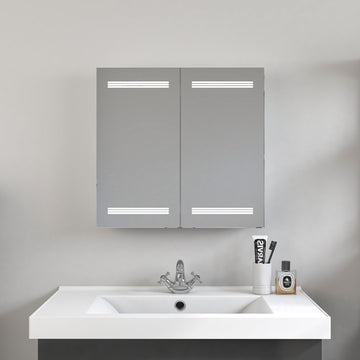
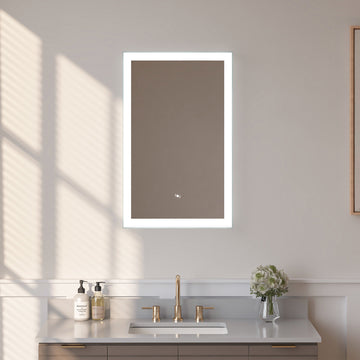
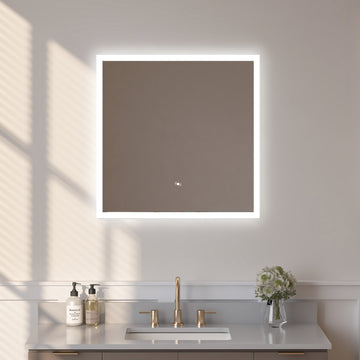
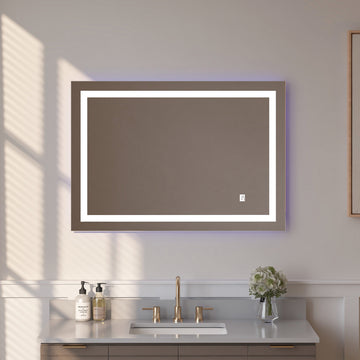
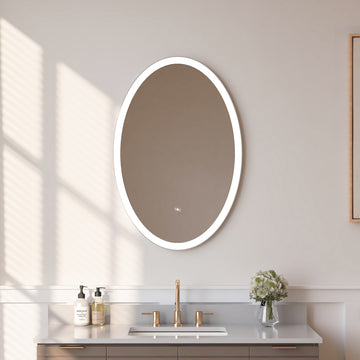
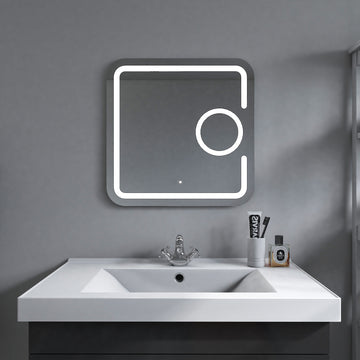
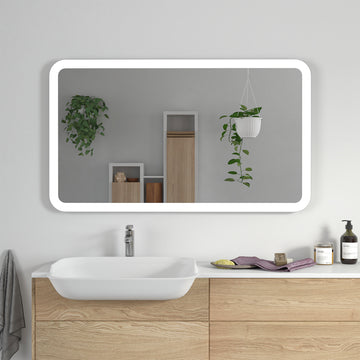
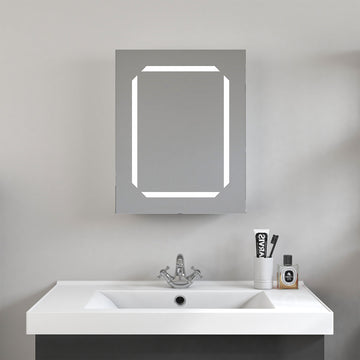
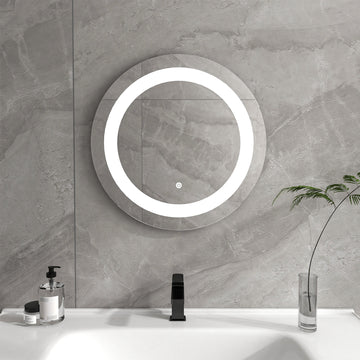
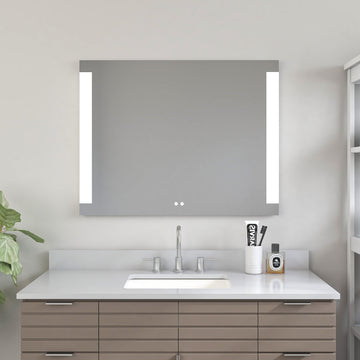
If you want some contrast, introduce it through hardware or the mirror rather than the cabinet body. Dark matte pulls on a light vanity, for example, add a design moment without adding visual weight. Pair the vanity with a well-scaled mirror to complete the look—Mirrors and LED Mirrors are worth exploring if you want integrated lighting that also reduces the need for a separate light fixture.
7. Think Vertically With Tall Storage Companions
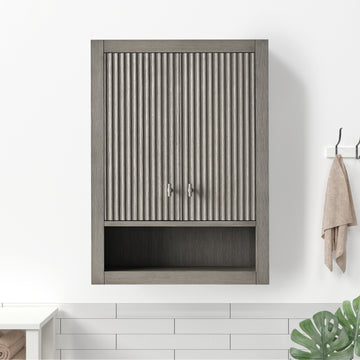
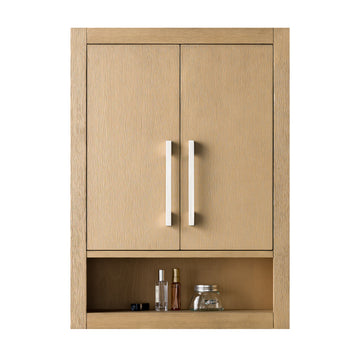
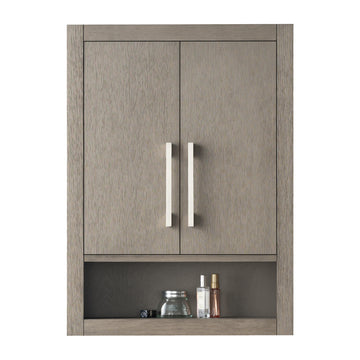
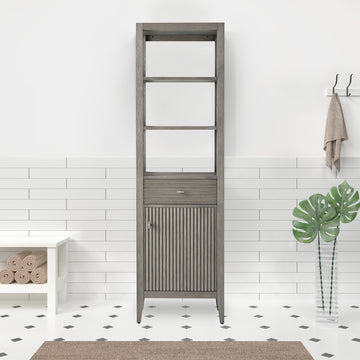
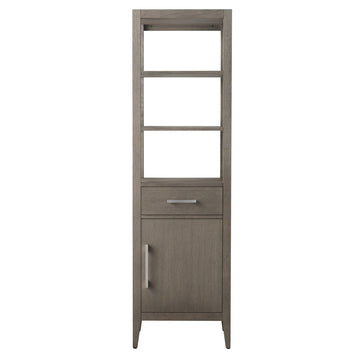
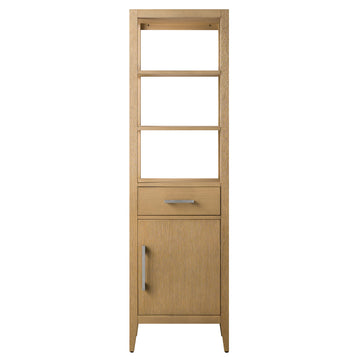
When floor space is limited, the solution is often right above your head. A tall, narrow linen cabinet or over-toilet storage unit can absorb a significant amount of the items you'd otherwise cram into a vanity. This frees you to choose a smaller vanity footprint without sacrificing overall storage capacity.
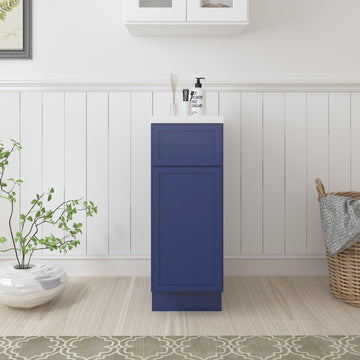
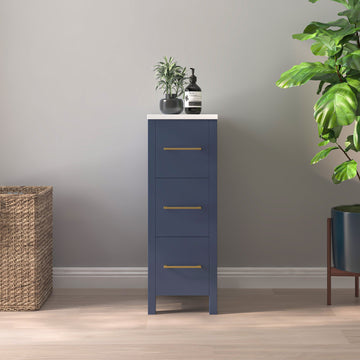
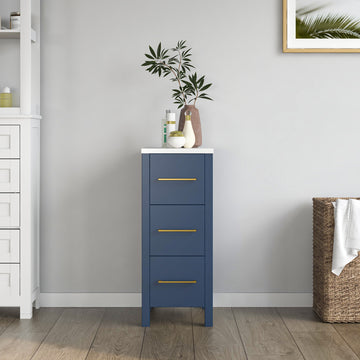
- A 12-inch-deep floor cabinet placed beside the vanity adds storage without projecting much into the room.
- Recessed medicine cabinets built into the wall provide storage with zero floor or counter footprint.
- Floating wall shelves above the toilet are a low-cost addition that keeps everyday items accessible.
Check out Freestanding Cabinets and Floating Cabinets to find vertical storage that coordinates with your vanity.
8. Measure Twice, Then Consider a Custom-Width Vanity
Many homeowners assume they're limited to whatever standard widths are available at a big-box store. In reality, vanities come in a wide range of widths—from 18 inches up to 72 inches—and choosing the right size for your exact wall space can make an enormous difference. A 24-inch vanity in a 30-inch alcove, for example, leaves awkward gaps on either side and makes the room look unfinished.
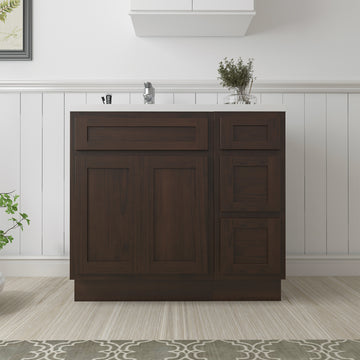
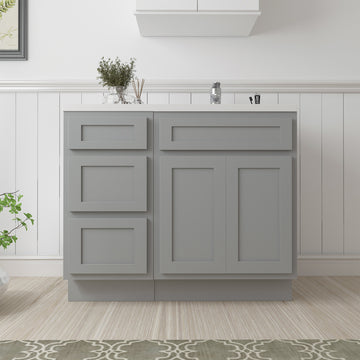
Before you shop, measure the available wall width, subtract at least 2 inches on each side for clearance, and use that number as your target. A vanity that nearly fills its designated wall looks built-in and intentional, even in a small space. Browsing the full Vanities collection gives you the widest selection to find the right fit.
9. Keep Plumbing Simple to Avoid Wasted Space
In a small bathroom, exposed plumbing pipes or bulky p-traps can limit where a vanity can realistically sit and how much usable cabinet space you have inside it. If you're renovating, consider roughing in plumbing that's centered on the wall and positioned higher—this allows for a floating vanity installation and keeps the cabinet interior clear of pipes.
For existing layouts, choose a vanity designed to accommodate your plumbing configuration. Many floating and freestanding models are built with plumbing access panels or open backs specifically for this reason.
10. Don't Overlook the Pedestal or Console Option
If storage isn't your main concern—maybe you have ample linen closet space nearby—a pedestal sink or console-style vanity can be the most space-efficient choice of all. With no cabinet base, the floor reads as fully open, and the room feels noticeably larger. Add a small floating shelf or two nearby for everyday essentials.
Pedestal sinks work especially well in powder rooms where the vanity is used primarily for hand-washing. Explore Pedestal Sink Vanities if a minimalist, open layout appeals to you.
What size vanity works best for a small bathroom?
For most small bathrooms, a vanity between 24 and 36 inches wide is the practical sweet spot. It provides enough counter space and cabinet storage without dominating the room. In a very tight powder room, an 18-to-24-inch vanity may be more appropriate. Always measure your available wall space and required clearance before selecting a size.
Is a floating vanity hard to install?
Floating vanities require secure attachment to wall studs or a properly reinforced wall, which makes professional installation worthwhile if you're not experienced with wall framing. The installation process itself isn't unusually complex, but because the entire weight of the cabinet, sink, and countertop relies on wall anchors, getting it right matters. Most manufacturers provide detailed mounting hardware and instructions.
Can a small bathroom have a double sink vanity?
Technically yes, but it usually isn't practical. Double sink vanities typically start at 48 inches wide, and in a small bathroom that width leaves almost no counter space on either side of the sinks. In most cases, a well-organized single sink vanity paired with smart vertical storage will serve two users better than a cramped double configuration.
Ready to find a vanity that fits your space perfectly? Browse the full Vanities collection at VanityArt to compare sizes, finishes, and configurations built for real bathrooms.