








Choosing between a sliding vs hinged shower door comes down to more than aesthetics. The decision affects how much floor space you can use, how often you'll be scrubbing tracks and hinges, and how well your shower stays watertight over the years. This guide breaks down both door types across the factors that matter most to US homeowners — so you can make a confident choice before you buy.
How Each Door Type Works
Understanding the basic mechanics helps explain why these two styles behave so differently in everyday use.
- Hinged shower doors are attached to the frame or a fixed glass panel on one side and swing open like a standard interior door. They typically open outward into the bathroom, though some models swing inward or both ways.
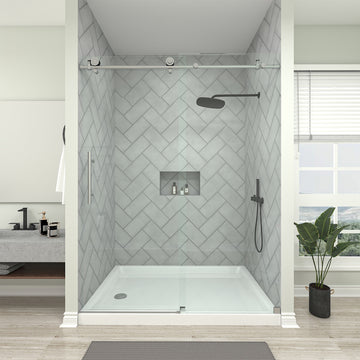
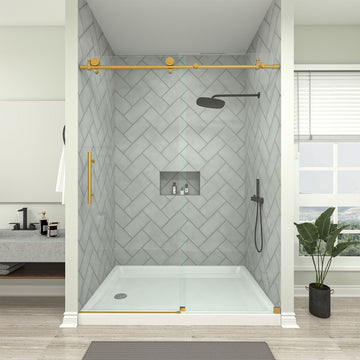
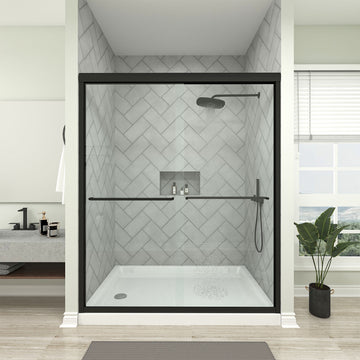
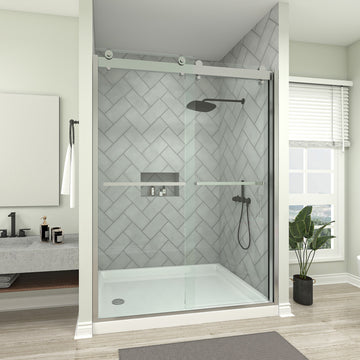
- Sliding shower doors (also called bypass doors) consist of two or more panels that roll along a top track and sometimes a bottom track. One panel slides in front of the other to open and close the enclosure.
Both styles are available in frameless, semi-frameless, and framed configurations. The hardware finish, glass thickness, and overall build quality vary significantly by manufacturer, so it pays to compare specifications carefully rather than going by looks alone.
Swing Clearance: The Space Factor That Decides Everything
This is often the single most practical reason homeowners choose one style over the other.
A hinged door needs clear floor space equal to the door's width every time it opens. On a standard 36-inch shower, that means roughly three feet of unobstructed bathroom floor in front of the opening. If a toilet, vanity, or wall sits within that arc, a hinged door will either collide with the fixture or force an awkward squeeze every time you step out.
Sliding doors require zero swing clearance. The panels move parallel to the wall, so the door never projects into the room. This makes sliding doors the practical default for:
- Alcove showers in smaller bathrooms
- Any layout where the toilet or bathroom vanity sits close to the shower opening
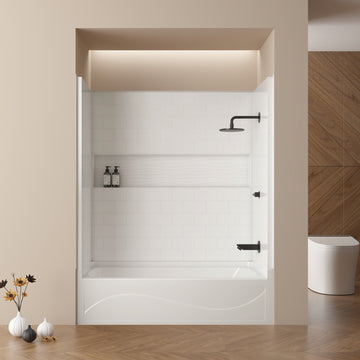
- Tub-shower combos where floor space is tight
If your bathroom is generously sized — say, a master bath with 60 or more inches between the shower and the nearest fixture — a hinged door becomes fully viable and gives you a cleaner, more open look when the door is swung wide.
Sliding vs Hinged Shower Door: Cleaning and Maintenance
Both door types collect soap scum and hard-water deposits, but they collect them in different places, which changes how much time you spend cleaning.
Sliding doors have a bottom track (on most framed and semi-frameless models) that traps water, soap residue, and mold over time. You'll need to clean that channel weekly in a hard-water area and periodically remove it for a deep scrub. Frameless sliding doors with a top-only track eliminate the bottom channel problem but still have rollers and guides that require occasional attention.
Hinged doors don't have tracks at all. The pivot points or hinges are the main hardware to maintain. Frameless hinged doors, in particular, have very little hardware surface area, which makes them easier to wipe down quickly. The tradeoff is that hinges can corrode or loosen over time, especially in showers with poor ventilation.
Quick cleaning comparison:
- Sliding door tracks: Weekly wipe-down, monthly deep clean
- Sliding door rollers: Inspect every 6–12 months, replace if worn
- Hinged door pivots: Monthly wipe, annual inspection for tightness
- Glass panels (both types): Daily squeegee use dramatically reduces buildup on either style
Seal Performance and Water Containment
How well a shower door keeps water inside the enclosure depends on the quality of its seals, the precision of its installation, and the door type itself.
Hinged doors, when properly installed and sealed with a quality bottom sweep and side seal, tend to create a tighter enclosure. Because the door closes against a fixed frame or panel and doesn't need to accommodate the movement of a sliding mechanism, the seal points are predictable and consistent. A well-fitted hinged door is less likely to leak at the sides over time.
Sliding doors have an inherent gap where the two panels overlap. Most manufacturers address this with a flexible vinyl wiper seal between panels, but that seal degrades with use and UV exposure. When it wears out, you'll notice water escaping at the overlap. Replacing the wiper seal is inexpensive (typically $10–$25) but it's a maintenance task hinged doors don't require in the same way.
Bottom seals on both door types need periodic replacement regardless of style. If water containment is a top priority — for example, if your shower is next to hardwood flooring — a hinged frameless door with a solid bottom sweep is often the more reliable long-term choice.
Opening Width and Accessibility
The usable opening width differs significantly between the two styles.
A sliding door on a 60-inch enclosure typically provides only half that width as an opening — roughly 28 to 30 inches — because one panel always covers part of the entry. For most adults, that's sufficient, but it can be limiting for households with older family members, anyone using mobility aids, or simply when cleaning the shower walls requires more reach.
A hinged door swings fully clear of the opening, giving you access to the entire width of the shower entry. On a 36-inch shower, you get a full 34 to 36 inches of clearance. This is a meaningful advantage for accessibility and for showers where you need to lean in to clean the walls or fixtures.
Aesthetics and Style Considerations
Both door types are available across a wide range of finishes and glass options, so neither has an absolute aesthetic edge. That said, there are some general tendencies worth knowing.
- Frameless hinged doors create an almost seamless glass look that works well in modern and transitional bathrooms. The minimal hardware keeps sightlines clean.
- Sliding doors, particularly semi-frameless versions with brushed nickel or matte black frames, suit contemporary and transitional styles and are widely available at multiple price points.
- Framed sliding doors are typically the most budget-friendly option and still look polished when paired with coordinating bathroom hardware.
When planning your shower enclosure, factor in the finish of your existing fixtures. Coordinating the door hardware with your faucet, towel bars, and mirror frame creates a more cohesive look without extra effort. Browse the full shower door collection to compare styles, finishes, and configurations side by side.
Cost Comparison
Price ranges vary by brand, glass thickness, and finish, but here's a realistic ballpark for the US market:
- Framed sliding doors: $150–$500 installed for standard alcove sizes
- Semi-frameless sliding doors: $400–$900 installed
- Frameless sliding doors: $800–$2,000+ installed, depending on glass and hardware
- Framed hinged doors: $200–$600 installed
- Frameless hinged doors: $700–$2,500+ installed, depending on glass weight and pivot hardware quality
Installation costs vary by region and complexity. Frameless glass doors require more precise installation and heavier hardware anchoring, which typically adds $100–$300 to labor over framed versions.
Which Door Is Right for Your Bathroom?
Use this quick decision guide:
- Choose a sliding door if: your bathroom is compact, fixtures are close to the shower opening, you have a tub-shower combo, or you prefer lower upfront cost.
- Choose a hinged door if: you have floor space for a full swing arc, want maximum opening width, prioritize long-term seal reliability, or prefer the frameless glass aesthetic.
- Either works well if: your bathroom has generous space, your budget covers a quality frameless version of either type, and you're committed to regular maintenance.
If you're redesigning the full bathroom, think about the door choice alongside your vanity and other fixtures early in the planning process. The shower door style you pick can influence the overall visual weight of the room, especially in smaller bathrooms. If you're also updating your vanity, explore options like a floating vanity or a single sink vanity to balance the space effectively alongside your new enclosure.
Frequently Asked Questions
Can a hinged shower door open inward?
Yes, some hinged shower doors are designed to swing inward, outward, or both directions. Inward-swinging doors save floor space but require that the shower interior is large enough — typically at least 36 by 36 inches — so the door doesn't hit you while you're standing inside. Most US manufacturers recommend outward-swinging doors for safety, since an inward door can trap someone who slips and falls against it.
How long do sliding door rollers typically last?
Quality nylon or stainless steel rollers on a sliding shower door generally last 5 to 10 years under normal use. Premature wear is usually caused by hard water mineral buildup in the track, which increases friction. Regular track cleaning and occasional lubrication with a silicone-based spray extend roller life significantly. Replacement rollers for most standard door models are widely available and cost $15–$40 for a set.
Are frameless shower doors harder to install than framed ones?
Yes, frameless doors require more precise measurement and heavier-duty wall anchoring because the glass panels — often 3/8 inch to 1/2 inch thick — carry more weight without a supporting frame. Minor wall irregularities that a framed door accommodates with adjustable channels can cause fit problems with frameless installations. Most homeowners hire a professional for frameless doors. Framed and semi-frameless doors are more forgiving and within reach of a confident DIYer with basic tools.
Ready to find the right fit for your shower? Explore the full range of styles, finishes, and sizes in the VanityArt shower door collection — and pair your new enclosure with coordinating bathroom accessories for a finished look throughout.