

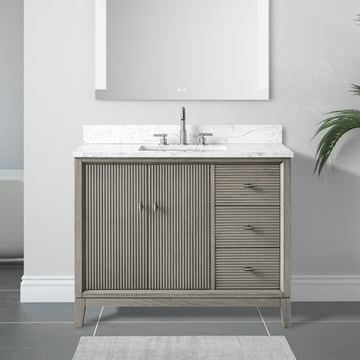
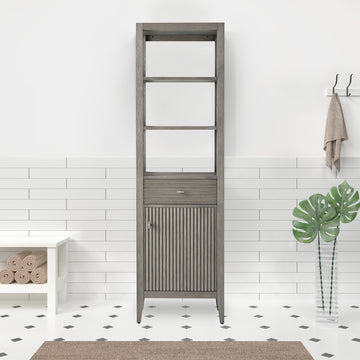




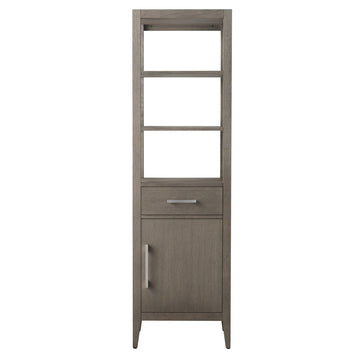
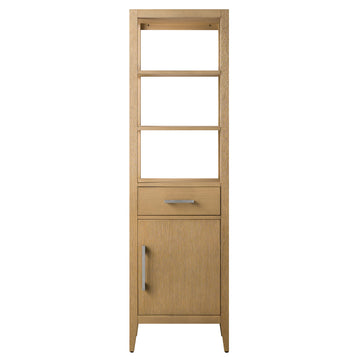









Getting kitchen cabinet dimensions right before you buy is one of the most important steps in any kitchen remodel. Order cabinets that are too tall, too wide, or too shallow, and you could end up with costly gaps, wasted space, or a layout that simply does not work. This guide walks you through every standard size you need to know — base cabinets, wall cabinets, tall cabinets, and the clearances between them — so you can shop with confidence and plan a kitchen that looks great and functions even better. Before you finalize anything, try mapping your space in our free kitchen planner to see how different cabinet sizes work together in real time.
Why Standard Kitchen Cabinet Dimensions Matter
Cabinet manufacturers build to industry-standard dimensions so that cabinets from the same line — or even different lines — align neatly, accept standard appliances, and work with off-the-shelf countertops. Deviating from these standards is possible with custom cabinetry, but it adds cost and lead time. Understanding the standards first gives you a baseline from which you can decide whether standard sizes will serve you or whether custom sizing is worth the investment.
Base Cabinet Dimensions
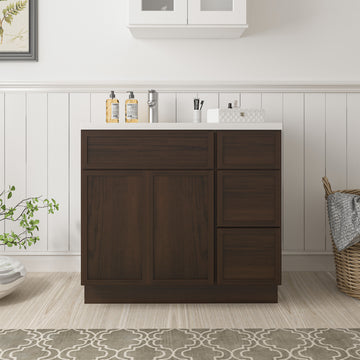
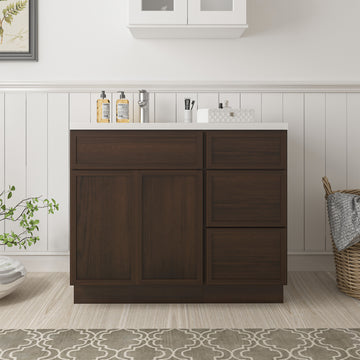
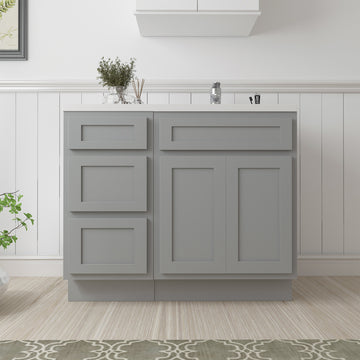
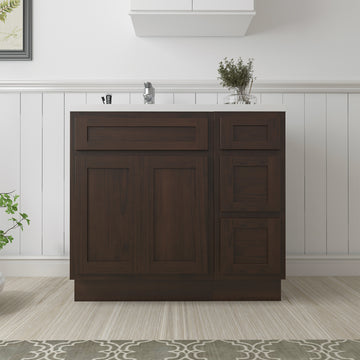
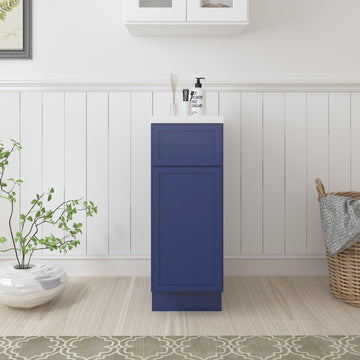
Base cabinets sit on the floor and support your countertop. They carry most of the storage weight in a kitchen and must accommodate appliances like dishwashers and ranges.
Height
Standard base cabinets are 34½ inches tall. Add a typical countertop (about 1½ inches thick) and you reach the industry-standard work surface height of 36 inches. If everyone in your household is significantly taller or shorter than average, you can request base cabinets in different heights from some manufacturers, but 34½ inches is the universal starting point.
Depth
Standard base cabinet depth is 24 inches, which accommodates a standard countertop overhang and leaves enough room for a comfortable work surface. Sink base cabinets are also 24 inches deep, giving you space to run plumbing.
Width
Base cabinet widths vary the most, typically ranging from 9 to 48 inches in 3-inch increments. Common widths include:
- 9, 12, 15, 18 inches — narrow cabinets ideal for spice pulls or tray storage
- 24, 27, 30, 33, 36 inches — the most frequently used widths for doors and drawers
- 42 and 48 inches — wide cabinets often used for sink bases or corner solutions
Wall Cabinet Dimensions
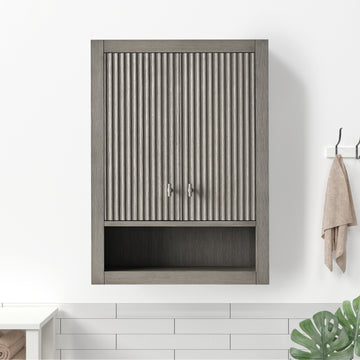
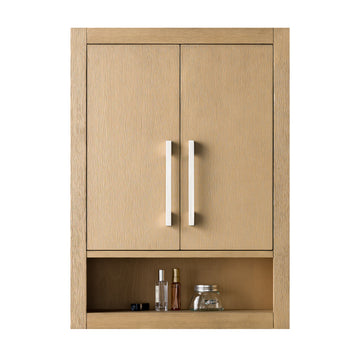
Wall cabinets mount to the wall above the countertop and base cabinets. Because they are at eye level, their height and positioning strongly affect how your kitchen looks and how easy it is to reach items stored inside.
Height
Wall cabinet heights typically come in 12, 15, 18, 24, 30, 36, and 42 inches. The 30-inch and 36-inch options are the most popular for standard kitchens. Taller 42-inch cabinets run all the way to a standard 9-foot ceiling with little to no gap, maximizing storage and giving the kitchen a built-in look. Shorter 12- to 18-inch cabinets work well above a refrigerator, range hood, or window.
Depth
Standard wall cabinet depth is 12 inches. Some specialty cabinets — like those designed for over-the-refrigerator storage — may be 24 inches deep to align with the appliance face.
Width
Wall cabinet widths mirror base cabinet widths and range from 9 to 48 inches in 3-inch increments. For visual balance, wall cabinets are generally aligned directly above base cabinets of the same width.
Clearance Between Wall and Base Cabinets
The standard clearance between the top of your countertop (36 inches from the floor) and the bottom of your wall cabinets is 18 inches. This gives enough room for small appliances like a stand mixer or toaster and makes the backsplash area feel open. Above a range or cooktop, building codes typically require at least 30 inches of clearance to a combustible surface (like a wood cabinet bottom), though non-combustible or rated range hoods may allow 24 inches — always check your local code.
Tall Cabinet Dimensions
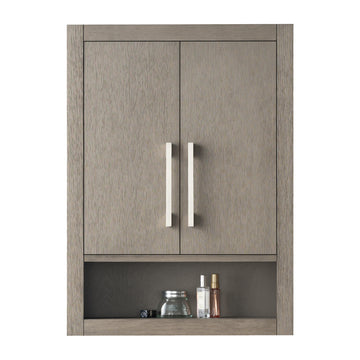
Tall cabinets — also called pantry cabinets, oven cabinets, or utility cabinets — run from floor to ceiling and provide the highest volume of storage in the kitchen.
Height
Standard tall cabinet heights are 84 inches and 96 inches, designed to align with 8-foot and 9-foot ceilings respectively. Some lines also offer 90-inch versions.
Depth
Tall pantry cabinets are typically 12 to 24 inches deep, depending on their purpose. A pantry cabinet used purely for dry storage is often 12 or 18 inches deep; one built around a wall oven is 24 inches deep to match the appliance.
Width
Tall cabinets most commonly come in widths of 18, 24, 30, and 36 inches.
Appliance Cutout Dimensions to Keep in Mind
Your cabinets must work around your appliances, not the other way around. Here are the standard rough openings you should plan for:
- Dishwasher: 24 inches wide × 24 inches deep × 34½ inches tall
- Standard range or slide-in range: 30 inches wide × 25 inches deep × 36 inches tall
- Refrigerator: 36 inches wide is common; allow at least 1 inch of clearance on each side and 1 inch above for ventilation
- Microwave drawer or built-in microwave: typically 24 or 30 inches wide; check the specific model spec sheet
Locking in your appliance specs before ordering cabinets prevents awkward gaps or the need to modify cabinetry on site.
Corner Cabinet Dimensions
Corner cabinets solve one of kitchen design's trickiest challenges: what to do with the dead space where two runs of cabinets meet. The two most common solutions are the blind corner cabinet and the L-shaped lazy Susan cabinet.
- Blind corner base cabinet: typically 36 or 42 inches on each leg, with one side partially hidden behind the adjacent cabinet
- Lazy Susan cabinet: usually 33 or 36 inches on each side; the rotating shelves make the full interior accessible
Wall corner cabinets follow similar logic, with diagonal corner wall cabinets measuring roughly 24 inches on each face.
Toe Kick Dimensions
The toe kick is the recessed area at the base of your cabinets that lets you stand comfortably close to the counter without stubbing your toes. Standard toe kick dimensions are 3½ inches tall and 3 to 4 inches deep. These dimensions are built into standard base cabinets and should not need adjustment in most kitchens.
Frequently Asked Questions
What is the most common kitchen cabinet height for a standard kitchen?
For base cabinets, the standard height is 34½ inches, bringing the total work surface to 36 inches when a standard countertop is added. For wall cabinets, 30-inch-tall units are the most widely used, though 36- and 42-inch options are popular when ceiling height allows.
Can I mix cabinet widths in the same kitchen?
Absolutely. Mixing widths is actually how designers create functional, visually interesting layouts. Narrow 9- or 12-inch cabinets pull out as spice racks or tray dividers, while wider 36-inch cabinets anchor the sink or range wall. The key is to plan the widths so they add up correctly along each wall run, accounting for appliance cutouts and any filler strips needed to close gaps at walls.
How much clearance do I need between facing cabinet runs?
A minimum of 42 inches of aisle space between two facing runs of cabinets is recommended for a single-cook kitchen. If two people cook together regularly, aim for 48 inches. This clearance allows appliance doors — particularly the dishwasher and oven — to open fully without blocking traffic flow.
Plan Your Kitchen with VanityArt
Now that you have a solid understanding of kitchen cabinet dimensions, the best next step is to see how they come together in your actual space. Our free kitchen planner lets you drag and drop cabinets, test layouts, and visualize clearances before you place a single order — saving you time, money, and the headache of mid-project surprises. Browse our full collection of kitchen cabinets at VanityArt and start designing the kitchen you have always wanted.