








When every square inch counts, choosing the right toilet can make or break a small bathroom layout. The best toilets for small bathrooms aren't just physically smaller—they're engineered to flush powerfully, fit non-standard rough-in distances, and leave enough floor space for you to actually move around. Whether you're renovating a half-bath, a guest bathroom under 40 square feet, or a narrow primary bath, this guide walks you through exactly what to look for and which toilet types earn their place in tight quarters.
Why Standard Toilets Often Fail in Small Bathrooms
A typical two-piece toilet with a 12-inch rough-in measures roughly 28 to 30 inches from tank to bowl tip. In a bathroom where the toilet wall sits close to the vanity or door swing, even two extra inches creates a cramped, unusable space. Beyond footprint, bulky tank profiles and exposed trapways collect dust and make cleaning harder—a real issue when the room is already tight.
The good news: toilet manufacturers have responded with a range of compact solutions. Understanding the key specs lets you shop with confidence instead of guessing.
The Most Important Spec: Rough-In Distance
The rough-in is the measurement from the finished wall behind the toilet to the center of the floor drain. Most US homes use a 12-inch rough-in, but older homes—especially those built before 1970—commonly have 10-inch or even 14-inch rough-ins. Installing the wrong size means the tank either jams against the wall or floats awkwardly away from it.
- 10-inch rough-in toilets are specifically designed for older homes and tight alcoves. They sit closer to the wall, which can recover 2 inches of usable floor depth in front of the fixture.
- 12-inch rough-in toilets are the standard and offer the widest selection, including many compact and short-projection models.
- Universal rough-in toilets work across 10, 12, and 14-inch measurements using adjustable trim—useful if you're unsure of your exact dimension.
Always measure your rough-in before shopping. It takes 30 seconds with a tape measure and saves a costly return.
Best Toilets for Small Bathrooms: Top Toilet Types to Consider
Short-Projection One-Piece Toilets
One-piece toilets merge the tank and bowl into a single molded unit. They typically sit lower to the ground, have a cleaner silhouette, and—crucially—tend to have a shorter overall depth than two-piece models. Look for units with a bowl-to-tank projection under 27 inches. Some compact one-piece models come in at 25 to 26 inches, freeing up noticeable space in a small footprint.
What to look for in a short-projection one-piece:
- Total depth (wall to front of bowl) under 27 inches
- Skirted or concealed trapway for easier cleaning
- Soft-close seat included or available
- WaterSense certification (1.28 gpf or less) to reduce utility bills
Browse the full range at VanityArt's Toilet collection to filter by style and dimensions.
Wall-Hung Toilets: The Space-Saving Gold Standard
Wall-hung toilets mount directly to an in-wall carrier frame, with the cistern (tank) hidden inside the wall cavity. The bowl hovers above the floor with no visible base, which creates an open, airy look and makes mopping the floor effortless. Because the bowl can be installed at any height between 15 and 19 inches, they also work well for accessibility needs.
Key advantages in small bathrooms:
- The visible bowl typically projects only 18 to 22 inches from the finished wall—a significant reduction versus floor-mounted models
- No floor seal means no grout-line buildup around the base
- The in-wall tank is virtually silent during filling
- The open floor visually expands the room, even in photos
The trade-off is installation cost. Wall-hung toilets require a structural carrier frame set inside a 2×6 or reinforced wall, and the in-wall cistern must be accessible via the flush plate for servicing. Budget for professional installation unless you have solid plumbing and carpentry skills.
Compact Round-Bowl vs. Elongated-Bowl Toilets
Elongated bowls (about 18.5 inches long) are generally considered more comfortable, but round bowls (about 16.5 inches long) save roughly 2 inches of depth—meaningful in a small room. That said, many manufacturers now offer elongated toilets with a compact footprint that approaches the depth of a round bowl while keeping the longer seat for comfort. If you have even 27 to 28 inches of clearance from the wall to whatever is in front of the toilet, a compact elongated model is worth prioritizing over a traditional round bowl.
Skirted Toilets: Small Footprint, Cleaner Look
Skirted toilets conceal the exposed trapway behind a smooth exterior panel that runs flush from tank base to floor. In a small bathroom this matters for two reasons: the clean lines make the fixture look smaller and less visually heavy, and there are no nooks around the trapway to scrub. Many skirted models also have a shorter overall depth because the smooth skirt allows the designer to trim the profile. If you're choosing between a traditional exposed-trapway toilet and a skirted model of the same listed dimensions, the skirted version will almost always look more compact in the space.
Bidet Seats and Small Bathrooms
A bidet seat replaces a standard toilet seat and adds washing functions without requiring a separate bidet fixture. In a small bathroom where a standalone bidet would be impossible, a bidet seat is a practical upgrade that adds comfort without consuming any additional floor space. Most bidet seats fit standard elongated or round bowls and require only a nearby GFCI outlet. If you're already replacing your toilet, pairing it with a bidet seat is an easy win.
What Else Affects How Big a Toilet Feels in the Room
The toilet itself is only part of the equation. The surrounding fixtures and storage choices shape how spacious the bathroom actually feels:
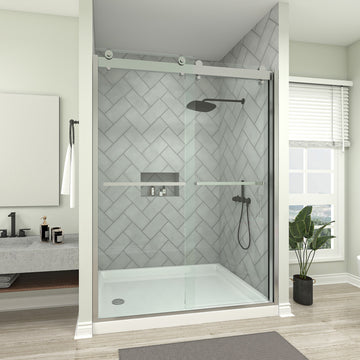
- Floating vanity: A floating vanity that mounts to the wall without a floor cabinet keeps the sight line open and makes the floor appear larger—a direct visual complement to a compact or wall-hung toilet.
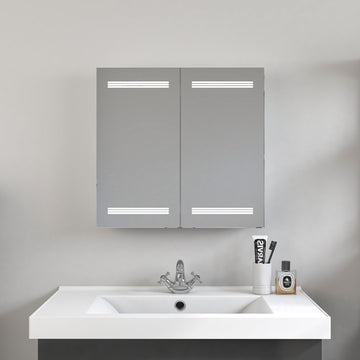
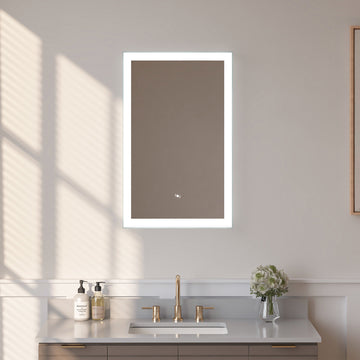
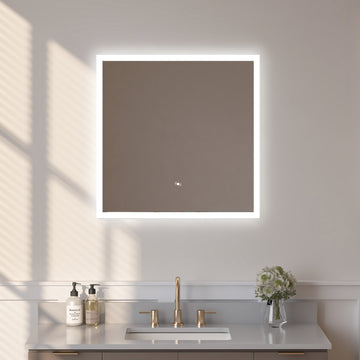
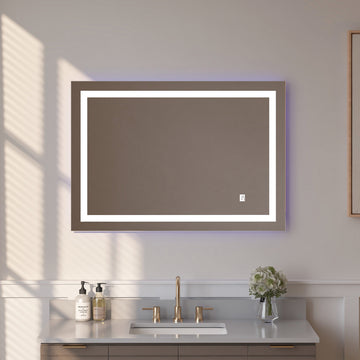
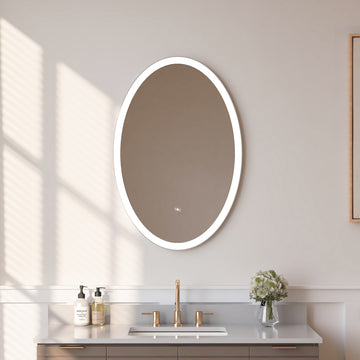
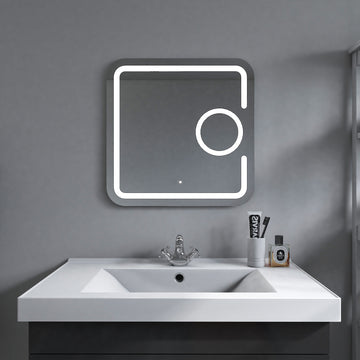
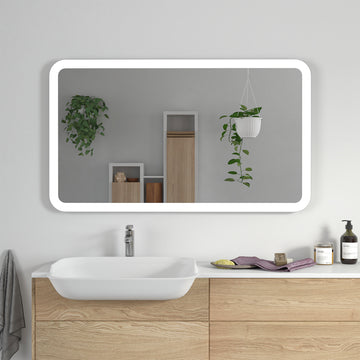
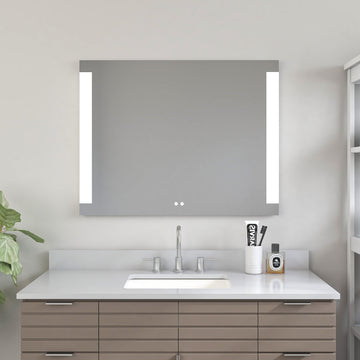
- Large mirrors: An LED mirror spanning the full width of the vanity wall bounces light and adds perceived depth to the room.
- Consistent finishes: Matching the toilet's finish (typically white or bone) to the vanity and tile keeps the eye moving rather than stopping at individual fixtures.
Checklist Before You Buy
- Measure rough-in distance from finished wall to drain center
- Measure available depth from the wall to the nearest obstruction (door, vanity, shower door)
- Check seat height preference: standard (15–17 inches) or comfort height (17–19 inches, ADA-compliant)
- Confirm the flush rating: look for MaP score of 500g or higher for reliable single-flush performance
- Verify whether a seat is included—many one-piece and wall-hung toilets are sold without one
- For wall-hung models, confirm the carrier frame is compatible with your wall framing
What is the minimum bathroom size for a toilet?
The IRC (International Residential Code) requires at least 21 inches of clear floor space in front of a toilet and 15 inches from the toilet centerline to any side wall or obstruction. In practice, most plumbers and designers recommend 30 inches of clearance in front and 18 inches from centerline to each side for comfortable use. A wall-hung toilet with a compact bowl can help you meet minimum clearance in bathrooms as small as 18 to 20 square feet.
Are short rough-in toilets harder to find?
10-inch rough-in toilets are less common than 12-inch models, but major manufacturers produce them as part of their standard lineup. You'll find fewer style options compared to 12-inch models, which is why it's worth shopping dedicated bathroom collections rather than big-box general merchandise. Confirm the exact rough-in spec in the product listing before purchasing.
Do compact toilets flush as well as full-size models?
Bowl size has very little to do with flush power. Flush performance depends on the trap diameter, water pressure, and the engineering of the flush valve and bowl channel. Many compact and wall-hung models use pressure-assist or dual-flush mechanisms that outperform gravity-fed standard toilets. Always check the MaP (Maximum Performance) flush score—aim for 500 grams or above, and 1,000 grams if waste removal is a priority in the household.
Ready to find your fit? Explore VanityArt's full Toilet collection to compare compact, wall-hung, skirted, and standard models side by side and get the right toilet for your space.