









Choosing a vanity cabinet is more than picking a color you like on a screen. The finish determines how your vanity looks five years from now—whether it still looks sharp or starts peeling, warping, or fading from daily steam and moisture. This bathroom vanity finish guide breaks down the most popular options by how they actually perform in a real bathroom environment, so you can buy with confidence and avoid a costly mistake.
Why Finish Durability Matters More Than You Think
Bathrooms are one of the harshest environments in a home. Humidity regularly spikes above 80%, temperatures shift quickly when hot showers run, and cabinet surfaces get splashed, wiped, and touched dozens of times a day. A finish that looks beautiful in a showroom can blister, yellow, or delaminate within a few years if it was not designed for these conditions.
When evaluating any vanity finish, focus on three things:
- Moisture resistance: How well does the surface seal out water vapor?
- Adhesion quality: Is the finish bonded firmly to the substrate, or just painted over MDF?
- Cleanability: Can you wipe it down with common cleaners without damaging the surface?
White Finishes: Classic, But Not All Equal
White remains the most popular vanity color in the US, and for good reason—it reflects light, pairs with almost any tile, and makes smaller bathrooms feel larger. However, white finishes vary significantly in quality.
Look for white vanities with a thermofoil or UV-cured lacquer finish rather than standard paint. Thermofoil wraps the cabinet in a heat-bonded vinyl film that resists moisture better than painted wood. UV-cured lacquers are baked on under ultraviolet light, creating a harder, more durable surface.
The main risks with white: yellowing over time (especially with cheaper finishes in direct sunlight) and showing water spots near the sink area. Gloss white shows marks more than satin or matte white, so factor in your cleaning habits. A semi-gloss or satin finish strikes the best balance of durability and low maintenance.
Gray Finishes: Forgiving and Moisture-Smart
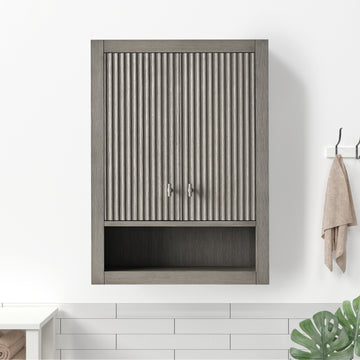
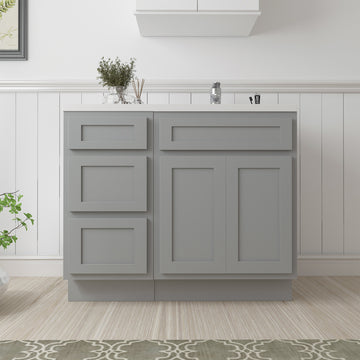
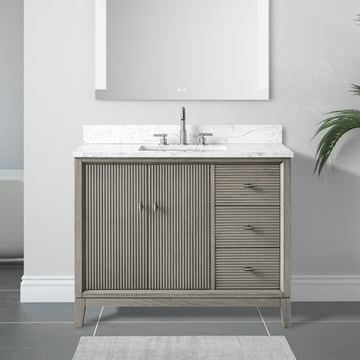
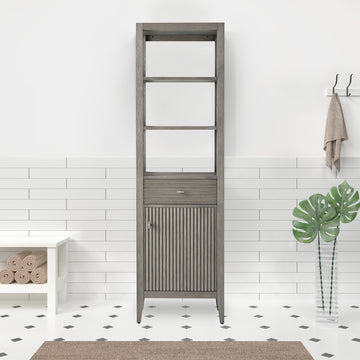
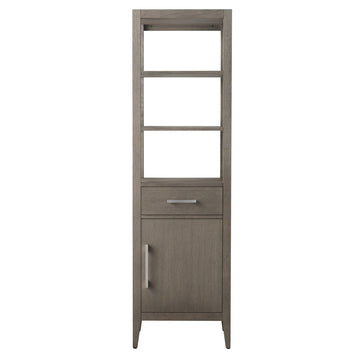
Gray has moved from trend to staple in bathroom design. Medium and dark grays are particularly practical because they hide water spots, small smudges, and the everyday wear that white surfaces reveal. From a performance standpoint, gray vanities with a PVC foil wrap or multi-layer lacquer tend to hold up well in humid conditions.
Lighter grays behave similarly to white in terms of showing marks. Darker charcoal grays can fade slightly if exposed to strong direct sunlight for extended periods. If your bathroom has a south-facing window, a mid-tone gray with a UV-resistant top coat is your most durable option.
Gray also pairs naturally with brushed nickel, matte black, and chrome hardware, giving you flexibility as you update accessories over time. Browse the Vanities collection to see how different gray tones work across various cabinet styles.
Navy and Deep Blue Finishes: High Impact, Higher Maintenance
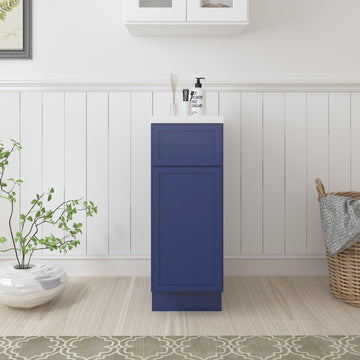
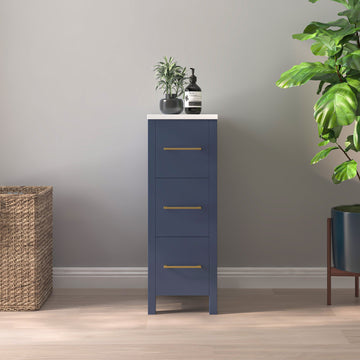
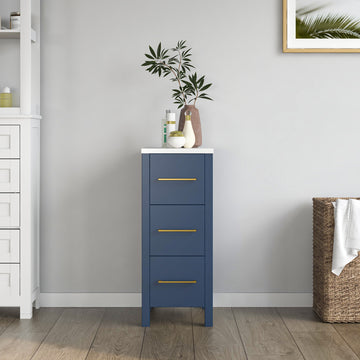
Navy vanities have surged in popularity over the past few years, and they photograph beautifully. In practice, they require a bit more care than neutral finishes. Deep pigment colors are more sensitive to UV exposure and can show chalking or subtle fading faster than whites and grays if the finish quality is not high.
For navy to last, prioritize:
- A high-solid lacquer or catalyzed finish that provides a thick, hard barrier
- Cabinets built on plywood rather than MDF as the core—plywood handles moisture expansion better
- Sealed edges and backs, not just the face frames, to prevent moisture from entering through the cabinet interior
Navy pairs exceptionally well with brass or gold hardware, white countertops, and natural wood accents. If you are set on this finish, invest in the higher-end option—the durability gap between budget and quality navy finishes is more noticeable than it is with neutrals.
Wood and Wood-Look Finishes: Warmth With Caveats
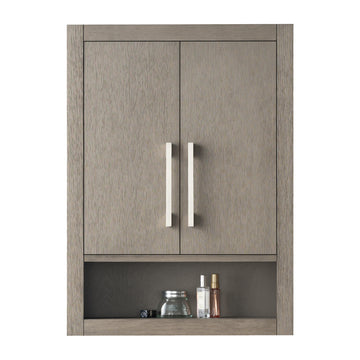
Natural wood vanities bring warmth and texture that no painted finish can fully replicate. The challenge is that real wood and engineered wood both react to moisture. Unfinished or poorly sealed wood will swell, crack, or develop mold over time in a bathroom setting.
Here is how to evaluate wood finish options:
- Solid wood with oil or wax finish: Beautiful but requires annual re-sealing. Not ideal for high-use master bathrooms.
- Solid wood with catalyzed lacquer: A much better choice for durability. The lacquer creates a stable barrier while preserving wood's natural appearance.
- Wood veneer over plywood: A practical middle ground. The veneer gives you the look of real wood at a lower cost, and the plywood core is more stable than MDF in humid conditions.
- Textured PVC foil wood-look finish: The most moisture-resistant option in this category. Indistinguishable from real wood at a glance, and it will not warp or crack.
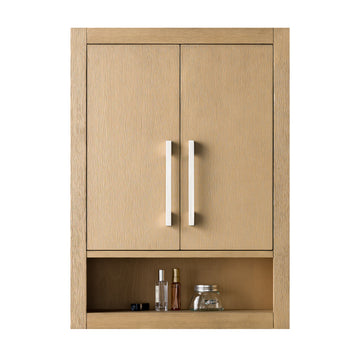
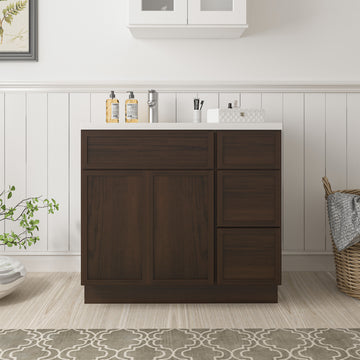
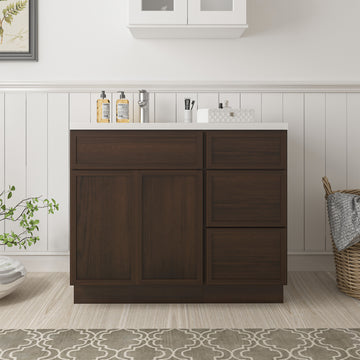
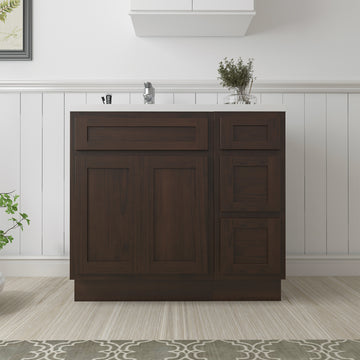
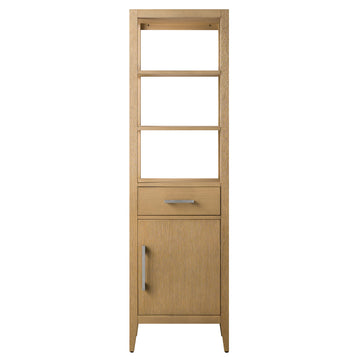
Light oak and walnut tones are currently the most popular wood finishes. They work in both modern and transitional bathrooms. If your bathroom ventilation is limited, lean toward the PVC foil wood-look finish over real wood. You can explore options across floating vanities and freestanding vanities to find the right wood-tone style for your layout.
The Role of Cabinet Construction in Finish Longevity
Even the best finish will fail prematurely if the underlying construction is poor. A few things to check before buying:
- Substrate material: Plywood holds screws and resists moisture better than particleboard. MDF falls in between—acceptable with proper sealing, but not ideal in high-humidity bathrooms.
- Dovetail or mortise-and-tenon joinery: Stronger than staples or simple glue. More resistant to the subtle movement caused by humidity changes.
- Soft-close hardware: Not a finish issue directly, but slamming doors stress the finish at stress points over time. Soft-close hinges extend the life of both the door and the cabinet box.
- Back panel: Should be sealed or finished, not raw wood, to prevent moisture intrusion from inside the cabinet.
For a curated selection of well-constructed options, the Best Selling collection is a good starting point—these are the vanities that customers return to consistently for both looks and build quality.
Matching Your Finish to Your Bathroom's Conditions
Not all bathrooms are the same. Here is a quick reference for matching finish type to bathroom conditions:
- High humidity, poor ventilation (e.g., no window, small exhaust fan): PVC foil or thermofoil finish on a plywood base. Avoid real wood and standard painted MDF.
- Moderate humidity, good ventilation: Lacquered wood, painted thermofoil, or wood veneer with sealed edges. All of the finish types covered here are viable.
- Guest bathroom, low daily use: Almost any quality finish will perform well. You have more freedom to prioritize aesthetics over extreme durability.
- Kids' bathroom: Prioritize wipe-clean surfaces. Gloss and semi-gloss lacquer finishes clean up faster than matte. Darker finishes hide toothpaste and soap marks better than white.
Hardware Finishes Should Match the Longevity of Your Cabinet
It does not make sense to invest in a high-quality vanity finish and then pair it with cheap hardware that will corrode or tarnish within two years. Brushed nickel and matte black hardware tend to hold up better in humid environments than polished chrome, which shows water spots and can pit over time. Solid brass hardware with a PVD (Physical Vapor Deposition) coating is among the most durable option available today and works across white, gray, navy, and wood finishes. Check out the Accessories collection for coordinating hardware and finishing touches that are built for bathroom use.
How do I tell if a vanity finish is high quality before buying?
Look for information on the finish type in the product description—terms like UV-cured lacquer, thermofoil, catalyzed finish, or PVC foil indicate better durability than generic "painted" descriptions. Also check the substrate: plywood is preferable to MDF or particleboard. If you can, request a sample chip and try wiping it with a damp cloth and a mild household cleaner to see how it responds.
Is a matte or gloss finish better for a bathroom vanity?
Gloss finishes are easier to wipe clean and more moisture-resistant because the surface is denser and less porous. Matte finishes hide minor scratches and surface imperfections better but can be harder to clean and may absorb moisture more readily over time. For high-traffic or humid bathrooms, semi-gloss or gloss is generally the more practical choice.
Can I repaint a bathroom vanity to extend its life?
Yes, but with limitations. If the existing finish is thermofoil, it must be lightly sanded and primed before paint will adhere properly. If the original finish is peeling or delaminating due to moisture damage, paint alone will not solve the underlying problem—the cabinet substrate may need to be addressed or replaced. For a lasting result, use a bonding primer followed by a cabinet-specific enamel paint, and apply a clear topcoat for added moisture protection.
The right finish choice comes down to your bathroom's specific conditions, your cleaning habits, and how long you want your vanity to look its best—start exploring durable, well-constructed options in the full Vanities collection to find a finish that works as hard as it looks.