





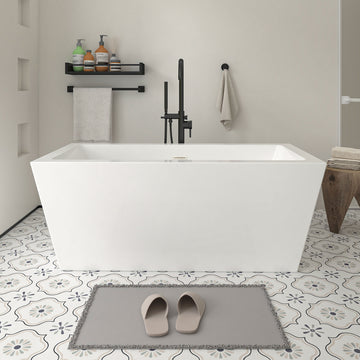
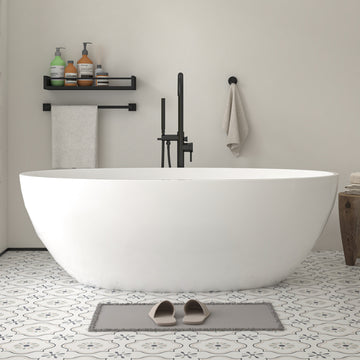
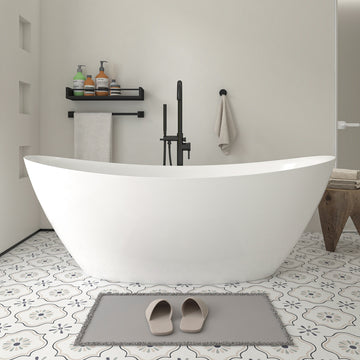

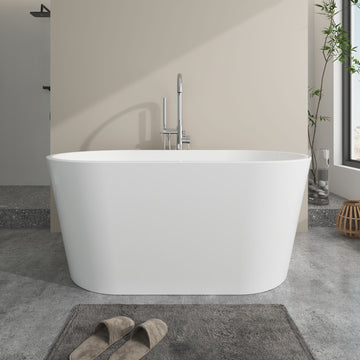
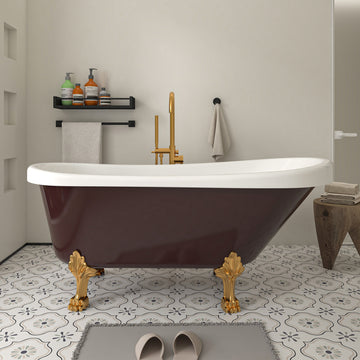

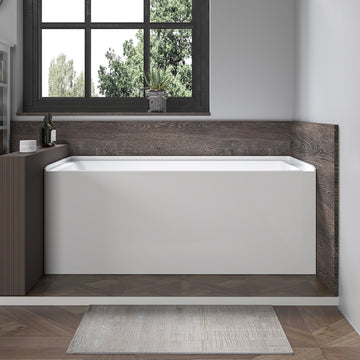
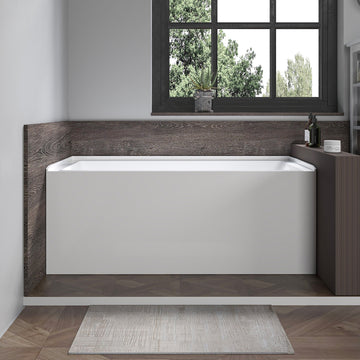
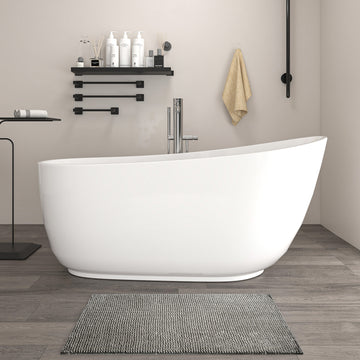


If you're renovating a bathroom and torn between a clawfoot tub vs freestanding tub, you're not alone. These two styles are often confused or used interchangeably, but they have meaningful differences in history, design, installation, and function. Understanding those distinctions helps you make the right call for your space, your plumbing setup, and the look you're going for.
A Quick History of Both Styles
The clawfoot tub is the older of the two. It emerged in the late 19th century, heavily influenced by European—particularly Dutch and British—bathing culture. Cast iron construction was standard, and the defining feature was always the decorative feet, usually modeled after animal claws gripping a ball. These tubs became a symbol of Victorian-era luxury and remained popular through the early 20th century before built-in tubs took over during the postwar housing boom.
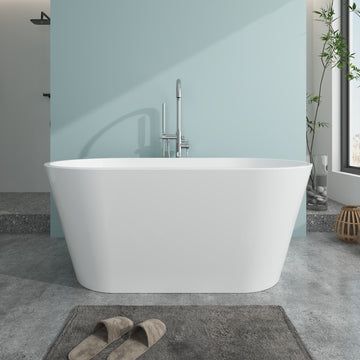
The modern freestanding tub is a broader category that came back into fashion in the 1990s and accelerated through the 2000s as open, spa-inspired bathroom design became mainstream. Designers began producing tubs that stood on their own without feet—using a solid base, a pedestal, or a sculptural shell—giving the category a much more contemporary feel. Today, freestanding tubs encompass a wide range of shapes and materials, from oval soakers to geometric stone resin designs.
Clawfoot Tub vs Freestanding Tub: The Core Distinction
Here is the clearest way to think about it: all clawfoot tubs are freestanding tubs, but not all freestanding tubs are clawfoot tubs. A clawfoot tub is a specific type within the freestanding category, defined by its raised feet. A freestanding tub simply refers to any tub that is not built into a wall or alcove and stands independently on the floor.
The two categories split mainly on:
- Foot structure: Clawfoot tubs have exposed decorative feet; most modern freestanding tubs rest on a solid base or integrated pedestal.
- Silhouette: Clawfoot tubs have a high, raised profile; contemporary freestanding tubs often sit low and wide.
- Material heritage: Clawfoot tubs were historically cast iron; modern freestanding tubs are commonly acrylic or stone resin.
- Aesthetic tone: Clawfoot tubs read as traditional or vintage; freestanding tubs range from transitional to ultra-modern.
Types of Feet on a Clawfoot Tub
The feet on a clawfoot tub are not just decorative—they affect how the tub sits, how it's leveled, and how it ages. There are a few distinct foot styles worth knowing:
- Ball and claw feet: The classic style. A curved, talon-like claw grips a round ball. This is what most people picture with a Victorian clawfoot tub.
- Paw feet: Modeled after an animal's paw—flatter and less dramatic than the ball and claw. They have a slightly softer, more casual look.
- Dolphin feet: Less common, these are shaped like a dolphin or fish tail. They appear on higher-end or more ornate antique reproductions.
- Imperial feet: A simpler, more geometric foot without the ball detail. These work well in transitional bathrooms where you want the raised clawfoot profile without the heavy Victorian ornamentation.
Foot finish matters too. You'll typically find options in chrome, brushed nickel, oil-rubbed bronze, matte black, and polished brass. The finish should coordinate with your faucet and other fixtures in the room.
Drain Placement: A Practical Difference
This is one of the most overlooked distinctions between these tub types, and it has a direct impact on installation.
Clawfoot tubs traditionally have an end drain—the drain is located at one end of the tub rather than in the center. This placement is tied to the original slipper and roll-top designs where one end was used for reclining and the other for the plumbing. Because the tub sits elevated on feet, the drain line must run along the floor to reach the waste pipe, which is usually visible unless you use a freestanding drain kit or install a floor plate cover.
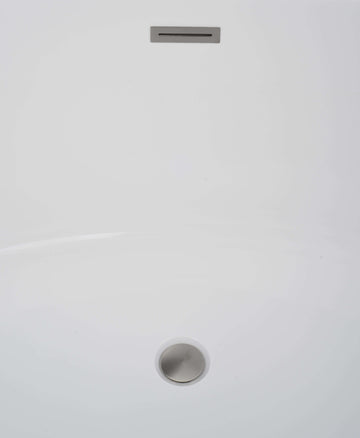
Modern freestanding tubs more commonly have a center drain, which is located at the lowest point of the tub floor. Center drain placement simplifies rough-in plumbing because the supply and drain can come straight up from the floor beneath the tub. However, it also means your floor drain rough-in must be positioned precisely before the tub is set in place—a measurement mistake here is expensive to fix.
Key installation notes:
- For a clawfoot tub, confirm your floor can support cast iron weight—often 300 to 500 pounds empty, more when filled.
- For a freestanding tub with a center drain, have your plumber mark the exact drain location before tile work begins.
- Both styles require freestanding tub faucets or floor-mount faucets, since there is no deck or surround to mount a standard faucet.
Material Differences and What They Mean Day-to-Day
Material choice affects heat retention, weight, maintenance, and cost. Here is a straightforward breakdown:
- Cast iron (common in clawfoot tubs): Excellent heat retention, very durable, extremely heavy, prone to chipping if the enamel is damaged, and more expensive to ship and install.
- Acrylic (common in modern freestanding tubs): Lightweight, easy to repair if scratched, warms up quickly but loses heat faster than cast iron, wide range of shapes and sizes available at lower price points. Browse acrylic tubs to see current options.
- Stone resin (popular in contemporary freestanding designs): A composite of natural stone powder and resin, heavier than acrylic but lighter than cast iron, excellent heat retention, smooth matte surface, higher price point. See the stone resin tub collection for examples.
Which Style Works Best for Different Bathroom Layouts
Room size, ceiling height, and existing plumbing all influence which tub type is practical for your home.
Clawfoot tubs tend to work well when:
- You have a period home with high ceilings and are trying to match original architectural character.
- Your bathroom is moderately large—clawfoot tubs read best when there is open floor space around them.
- You prefer a traditional, vintage, or farmhouse aesthetic.
Modern freestanding tubs tend to work well when:
- You want a clean, contemporary or transitional look.
- You need more flexibility in tub dimensions—freestanding tubs come in a wider range of widths and lengths, including compact options.
- You prefer a low-profile tub that is easier to step in and out of.
If you're still deciding on tub size, it helps to browse by dimension. VanityArt carries options in common sizes including a 59 inch bathtub and a 67 inch bathtub, which covers most standard bathroom footprints.
Cost Comparison: What to Budget
Pricing varies widely based on material, brand, and finish, but here are general ranges for US buyers:
- Entry-level acrylic freestanding tub: $500–$1,200
- Acrylic clawfoot tub: $800–$1,800
- Cast iron clawfoot tub: $1,500–$4,000+
- Stone resin freestanding tub: $1,800–$5,000+
Installation labor adds another $200–$600 depending on your location and the complexity of the plumbing rough-in. Cast iron tubs may require reinforced subfloor work, which adds cost.
Cleaning and Long-Term Maintenance
Both tub types require regular cleaning, but the raised feet on a clawfoot tub add one step: you need to clean underneath the tub and around each foot. Dust and moisture collect in those areas and can eventually damage the floor finish. A weekly wipe-down prevents buildup.
Modern freestanding tubs with solid bases are easier to clean around since there are no feet gaps, but water can still pool at the base edge if the tub is not perfectly level or sealed.
For both styles, avoid abrasive cleaners on the tub interior. Use mild soap, a soft cloth, and non-abrasive bathroom cleaner to protect the finish over time.
Frequently Asked Questions
Can a clawfoot tub be used as a shower?
Yes. Many clawfoot tubs can be paired with a freestanding shower riser, a circular shower curtain rod, and a handheld showerhead. This requires the tub faucet to have a diverter. It works functionally, but keep in mind the curtain surrounds the entire tub, which some homeowners find awkward in smaller bathrooms.
Do freestanding tubs require special plumbing?
Not special plumbing exactly, but precise rough-in work. A freestanding tub typically needs floor-supply connections and a floor drain rough-in positioned directly under where the tub will sit. This needs to be planned before tile is laid. Using a wall-mount faucet is an alternative that gives you more flexibility on faucet placement.
Is a clawfoot tub harder to get into than a modern freestanding tub?
Generally, yes. Because clawfoot tubs are raised on feet, the tub rim sits higher off the floor—typically 24 to 28 inches. Modern freestanding tubs often sit lower, with rim heights around 18 to 22 inches. For older adults or anyone with mobility considerations, a lower-profile freestanding tub is usually the more accessible choice.
Ready to find the right fit for your bathroom? Explore the full clawfoot tub and freestanding tub collections at VanityArt to compare styles, sizes, and materials side by side.