








Choosing between an elongated vs round toilet might seem like a minor detail, but it affects daily comfort, how well the toilet fits your space, and whether it meets ADA accessibility standards. If you're renovating a bathroom or replacing an aging fixture, understanding the real differences between these two bowl shapes will help you make a decision you won't regret five years from now.
The Basic Difference: Shape and Size
The names describe exactly what you get. An elongated toilet bowl has an oval shape that extends roughly two inches longer than a round bowl — typically 18 to 19 inches from the seat hinge to the front rim. A round toilet bowl measures closer to 16 to 17 inches in the same direction.
That two-inch difference sounds small, but it changes how the toilet fits in a room, how it feels to use, and what installation requirements apply. Both shapes are available in a wide range of styles, including skirted toilets and models with bidet seats, so shape is just one piece of the decision.
Comfort: Where Elongated Toilets Have the Clear Edge
For most adults, an elongated bowl is simply more comfortable. The extended front provides more support and a seating position that feels closer to a standard chair. This matters most for:
- Taller users or those with longer torsos
- Older adults who spend more time seated
- Anyone with hip, knee, or lower back issues
- Households adding a bidet seat, which often fits elongated bowls better
Round toilets aren't uncomfortable — they're the standard most people grew up with — but they offer less front clearance and can feel cramped for larger adults. For a small child's bathroom or a powder room used occasionally, a round bowl is perfectly adequate. For a primary bathroom where adults use the toilet daily, elongated wins on comfort almost every time.
Space Requirements: Where Round Toilets Earn Their Place
The two-inch length difference adds up fast in a tight bathroom. Building codes in most US states require a minimum of 21 inches of clear floor space in front of a toilet (some codes require 24 or 30 inches). In a small powder room, a half bath, or a bathroom where the toilet sits close to a door swing or vanity, those two extra inches can make the difference between a code-compliant installation and one that doesn't pass inspection.
Here's a practical way to think about it:
- Bathroom under 35 square feet: A round toilet is usually the safer choice for clearance.
- Bathroom 40 square feet or more: An elongated toilet fits comfortably in most layouts.
- Tight corner installations: Measure from the wall behind the toilet to any obstruction in front before deciding.
- Back-to-wall or alcove layouts: Elongated bowls work well here as long as forward clearance meets code.
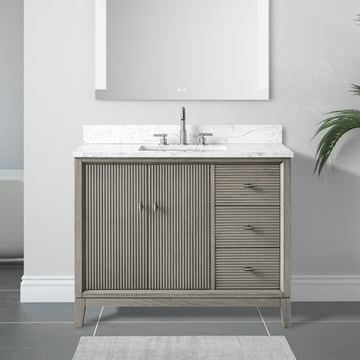
If you're also updating your vanity during a renovation, check the clearance between the toilet and the vanity cabinet. Browse floating vanities if floor space is tight — they visually open up smaller bathrooms and can make a compact layout feel less crowded.
Rough-In Measurement: The Number That Actually Governs Fit
Before bowl shape enters the conversation, you need to know your rough-in measurement. This is the distance from the finished wall behind the toilet to the center of the drain pipe. The three standard rough-in sizes in the US are:
- 10-inch rough-in: Found in older homes, less common today
- 12-inch rough-in: The most common in US homes built after 1970
- 14-inch rough-in: Less common, found in some older construction
Both elongated and round toilets are manufactured for 12-inch rough-ins as the standard. If your rough-in is 10 or 14 inches, your selection narrows regardless of bowl shape. Always measure your rough-in before shopping. A toilet that doesn't match your rough-in requires either an offset flange (which adds cost and complexity) or a complete replacement of the drain rough-in.
The bowl shape does not change the rough-in requirement — a 12-inch rough-in elongated toilet and a 12-inch round toilet both connect to the same drain position. Shape only affects how much space the bowl occupies in front of the drain.
ADA Compliance: What It Means and Which Shape Qualifies
ADA-compliant toilets must have a seat height between 17 and 19 inches from the finished floor — sometimes called "comfort height" or "chair height" in product listings. Standard toilets sit at 14 to 15 inches, which many people find difficult to use as they age.
Here's the important distinction: ADA compliance is about seat height, not bowl shape. Both elongated and round bowls can be ADA compliant. However, in practice, most ADA-height toilets sold in the US use an elongated bowl. The reasons are practical — the longer bowl pairs naturally with the taller base proportions, and the added seating surface makes the higher height more comfortable and stable.
If ADA compliance or aging-in-place design is a priority for your bathroom, look for toilets labeled "comfort height" and check the seat height specification. Most products in our elongated toilet collection include seat height specifications in the product details.
Water Efficiency: Same Standard, Regardless of Shape
Water consumption is determined by the flush system and tank design, not the bowl shape. Both elongated and round toilets are available in WaterSense-certified models that use 1.28 gallons per flush (GPF) or less, compared to the older 1.6 GPF standard. Dual-flush models offer a partial flush option for liquid waste, further reducing consumption.
If water efficiency is a factor in your decision — especially in states with conservation requirements — focus on the flush rating in the product specs rather than the bowl shape.
Cost Differences: Generally Minimal
At the entry level, elongated toilets typically cost $20 to $50 more than comparable round models from the same manufacturer. At mid-range and higher price points, the gap narrows considerably and often disappears. Installation labor is the same for both shapes.
The seat is one place where shape matters to your wallet: elongated seats and round seats are not interchangeable. If you plan to add a bidet seat or a high-end soft-close seat, confirm the seat dimensions match your bowl shape before purchasing.
When planning a full bathroom refresh, the toilet is usually one of the smaller line items compared to a vanity or tub. If you're also shopping for fixtures, browse the full toilet collection alongside best-selling bathroom products to compare options in one place.
Which Should You Choose? A Quick Decision Guide
Most homeowners overthink this choice. Here's a straightforward framework:
- Primary bathroom for adults: Choose elongated. Better comfort, more likely to be ADA height, fits most standard bathrooms.
- Small powder room or half bath: Consider round if clearance is under 30 inches from the bowl front to the nearest obstruction.
- Children's bathroom: Either shape works, but round toilets have a slightly lower profile that younger children find easier to use.
- Aging-in-place or accessibility priority: Choose elongated with comfort height (17–19 inches).
- Adding a bidet seat: Confirm bidet compatibility — most quality bidet seats are designed for elongated bowls.
Frequently Asked Questions
Can I replace a round toilet with an elongated toilet without any plumbing changes?
Yes, as long as the rough-in measurement is the same (typically 12 inches) and there is enough clear floor space in front of the toilet after installation. No plumbing modifications are needed — the connection point at the floor flange is the same for both shapes. The only thing that changes is how far the bowl extends toward the front of the room.
Are elongated toilet seats and round toilet seats interchangeable?
No. Elongated seats are longer and oval-shaped; round seats are shorter and more circular. Using the wrong seat leaves gaps at the front of the bowl or causes the seat to overhang incorrectly. Always match the seat to the bowl shape specified on your toilet model.
Does bowl shape affect flushing power or clog resistance?
Bowl shape has minimal effect on flushing performance. Flush power is determined by the trap design, flush valve size, and water pressure. A well-engineered round toilet will outflush a poorly designed elongated model. When comparing toilets, look at MaP (Maximum Performance) flush test scores rather than bowl shape to evaluate clog resistance.
Whether you're replacing a single fixture or planning a complete bathroom overhaul, choosing the right toilet shape is a straightforward decision once you know your space constraints and comfort priorities — explore the full range at VanityArt's toilet collection to find the right fit for your bathroom.