









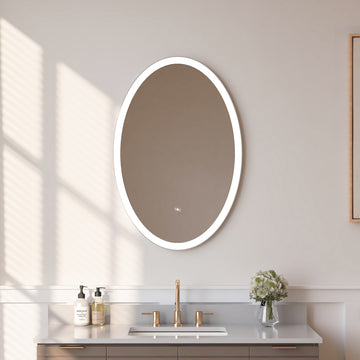
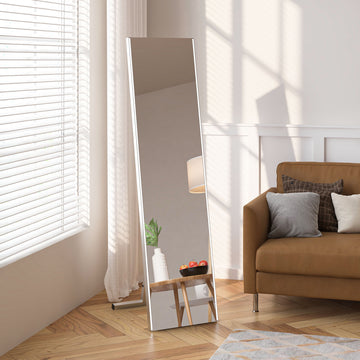
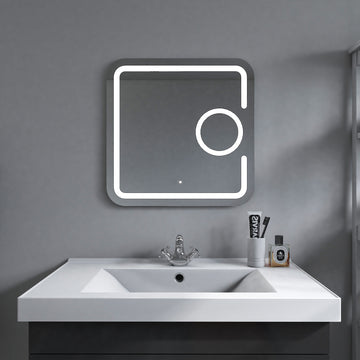
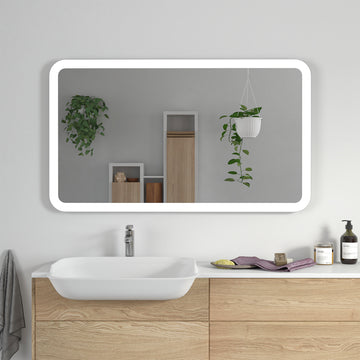

Hanging a heavy bathroom mirror feels straightforward until you hear that sickening crack of drywall giving way. Knowing how to mount a bathroom mirror on drywall correctly—before you ever pick up a drill—is what separates a safe, lasting installation from a costly repair job. This guide walks you through every stage: locating studs, choosing the right hardware, understanding weight limits, and securing the mirror so it stays put for years.
Know Your Mirror's Weight Before You Buy Any Hardware
The single most important number in this project is your mirror's weight. A small frameless mirror might weigh 8 pounds. A large framed vanity mirror can easily hit 50 to 80 pounds. Weigh the mirror on a bathroom scale before you purchase a single anchor or screw. Write that number down and keep it in front of you throughout the project.
As a general rule:
- Under 20 lbs: quality drywall anchors are usually sufficient
- 20–50 lbs: use heavy-duty anchors or, ideally, at least one wall stud
- Over 50 lbs: studs are strongly recommended; anchors alone are a risk
Manufacturers print a maximum load rating on every anchor package. Never exceed it, and always apply a safety buffer of at least 25 percent.
How to Find Studs Behind Drywall
Studs are your most reliable mounting points. A wood stud can handle 80 to 100 pounds per fastener when a proper screw is used, far more than any drywall anchor. Here is how to locate them reliably.
- Electronic stud finder: The most accurate option. Slowly drag it horizontally across the wall, keeping it flat. Mark both edges of the stud, then find the center. Verify by driving a small finish nail at the center mark before committing to a larger hole.
- Magnet method: A rare-earth magnet slides along the wall until it snags on a drywall screw beneath the paint, revealing stud location. Slower but useful when a stud finder gives inconsistent readings.
- Knock test: Tap across the wall with your knuckle. A hollow sound means empty drywall; a denser, flatter thud suggests a stud. Use this only to narrow your search, then confirm with one of the methods above.
In most US homes, studs are spaced 16 inches on center. Once you find one, measure 16 inches in either direction to predict the next. Bathroom walls directly above a vanity often have additional blocking installed during construction, which is a bonus mounting point worth probing for.
Drywall Anchor Types and Their Real Weight Limits
When studs don't line up where you need them, anchors fill the gap. Not all anchors perform equally in drywall, and bathroom humidity adds stress over time. Here is a breakdown of the main types.
- Plastic expansion anchors: Rated for 10–25 lbs in drywall. Fine for lightweight mirrors. They expand as you drive the screw, gripping the drywall from inside. Avoid these for anything over 20 lbs.
- Toggle bolts (traditional): Rated up to 50 lbs in half-inch drywall. The spring-loaded wings open behind the wall. Reliable but awkward—if you remove the bolt, the wing falls into the wall cavity.
- Snap toggles (strap toggles): Rated up to 80 lbs per anchor in half-inch drywall. The plastic channel stays in place even after the bolt is removed, making repositioning easier. These are the best general-purpose choice for heavy mirrors.
- Molly bolts: Rated 25–50 lbs depending on drywall thickness. They expand behind the wall when tightened. Good for medium-weight mirrors where you want a cleaner finished look.
- Self-drilling drywall anchors: Rated 25–75 lbs depending on the model. They thread directly into drywall without a pilot hole. Look for models rated specifically for their load before trusting the packaging weight printed prominently on the front.
In a bathroom, always choose anchors labeled for humid or wet environments, or use stainless steel hardware to prevent rust staining on your wall.
Tools You Need for a Safe Mirror Mounting Job
Gather everything before you start. Stopping mid-project to find a tool leads to shortcuts that cause problems.
- Electronic stud finder
- Drill with assorted bits
- Level (24-inch recommended for mirrors wider than 30 inches)
- Tape measure and pencil
- Appropriate anchors and screws for your mirror's weight
- Screwdriver (manual for final tightening to avoid over-torquing)
- Painter's tape (for marking without damaging paint)
- A second person to hold the mirror during test-fitting
How to Mount a Bathroom Mirror on Drywall: Step-by-Step
With your weight confirmed, studs located, and hardware selected, you are ready to work.
- Step 1 – Mark the hanging height. Measure up from the vanity countertop or floor to determine where the bottom edge of the mirror should sit. Mark that line lightly with a pencil, using a level to keep it perfectly horizontal.
- Step 2 – Transfer the hardware positions. Lay the mirror face-down on a padded surface. Measure the exact distance between the hanging hardware points on the back of the mirror—D-rings, keyhole slots, or wire attachment points. Transfer those measurements to the wall using your level line as a reference baseline.
- Step 3 – Check marks against studs. See how your marks align with the studs you found. If one or more marks land on a stud, great—use a #10 wood screw at least 2.5 inches long. For marks landing in open drywall, select the appropriate anchor from the types above.
- Step 4 – Install anchors or drive screws. For snap toggles, drill the specified hole size (usually 1/2 inch), insert the strap, pull it taut, and snap off the excess. For wood screws into studs, drill a pilot hole slightly narrower than the screw shank to prevent splitting. Do not over-tighten—leave screw heads protruding just enough to hook the mirror hardware.
- Step 5 – Hang and test. With a helper, lift the mirror onto the screws or hooks. Check level again once it is hanging. Apply gentle outward pressure at the top to confirm the mirror feels solid and does not shift.
- Step 6 – Add a safety tether. For mirrors over 30 lbs, add a small security bracket or a bead of clear mirror mastic at the bottom edge. This provides a secondary catch if a hanging point ever loosens.
Common Mistakes That Lead to Mirror Falls
- Using anchors rated for less than the mirror's actual weight
- Installing anchors too close together—space them at least as far apart as the mirror is wide, using the outermost hanging points
- Over-tightening screws until the drywall dimples and the anchor loses its grip
- Skipping the level check and relying only on visual judgment
- Ignoring the wall condition—old, water-damaged drywall behind bathroom tile or near a shower can be significantly weakened
If you notice any soft spots, bubbling paint, or discoloration on the wall where you plan to mount the mirror, address the moisture issue before hanging anything heavy.
Choosing the Right Mirror for Your Bathroom Wall
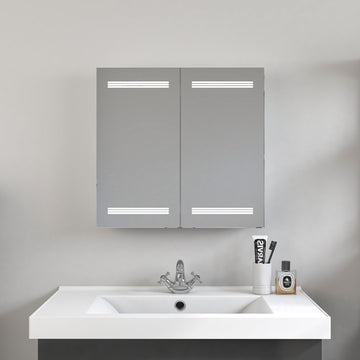
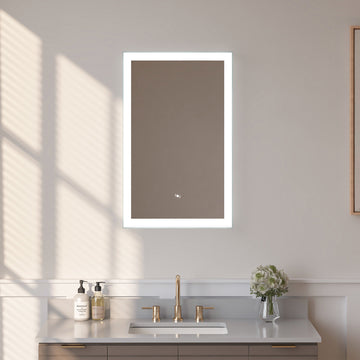
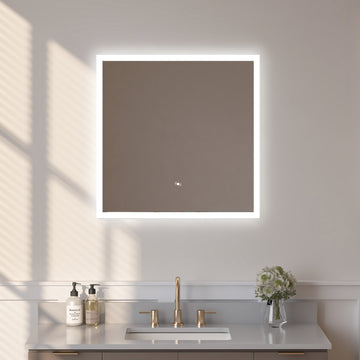
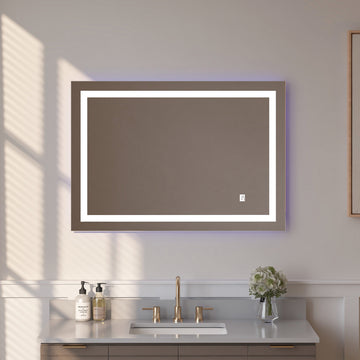
Sometimes the safest fix is selecting a mirror designed with mounting hardware already matched to its weight. Frameless mirrors typically distribute weight more evenly with multiple clip points. Framed mirrors with a wire across the back place all load on a single horizontal line, which increases stress on each anchor. If you are shopping for a new mirror, look for models that include mounting templates and rated hardware in the box.
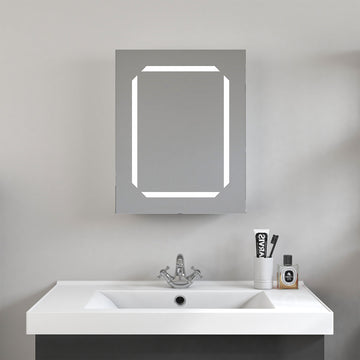
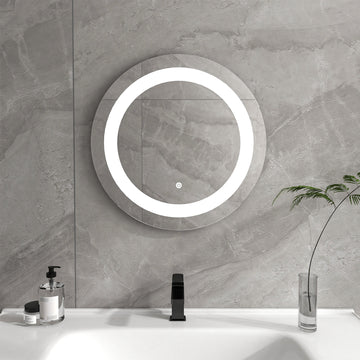
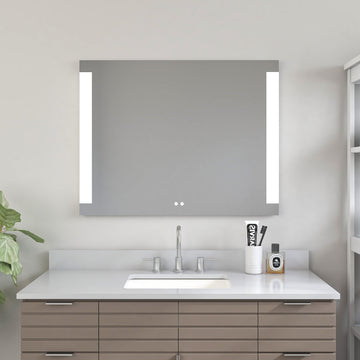
For a curated selection that pairs well with bathroom vanities and comes ready for straightforward installation, browse the Mirrors collection at VanityArt, including options from the LED Mirror lineup that include integrated backing boards for more distributed wall contact. If you are also updating your vanity at the same time, the Vanity Set with Mirror collection offers coordinated combinations that eliminate the guesswork of matching styles and sizes. You can also explore the full Best Selling range to see what other US homeowners are pairing together, or browse the Vanities collection to find the right base before finalizing your mirror choice.
How much weight can drywall hold without a stud?
Standard half-inch drywall with a quality snap toggle anchor can hold up to 75–80 pounds per anchor point. However, for bathroom mirrors, staying under 50 lbs per anchor is a safer real-world target because humidity, vibration from doors, and aging drywall compound reduce that theoretical maximum over time.
Can I hang a heavy mirror without finding a stud?
Yes, but only if the combined anchor rating exceeds the mirror's weight by at least 25 percent, the drywall is in good condition, and you use a minimum of two properly spaced heavy-duty anchors such as snap toggles. Studs are always preferable for mirrors over 40 lbs.
What screws should I use to mount a mirror into a wall stud?
Use coarse-thread #10 wood screws, at least 2.5 inches long, to ensure at least 1.5 inches of penetration into the stud after passing through the drywall. In a bathroom, choose screws with a corrosion-resistant coating—zinc-plated or stainless steel—to prevent rust from bathroom moisture.
Mount your mirror with confidence and the right hardware, and it will stay exactly where you put it—explore the full Mirrors collection at VanityArt to find a style and size built for your wall.