










Choosing between a skirted toilet vs standard toilet comes down to two things most homeowners care about deeply: how the fixture looks and how long it takes to keep clean. Both types flush the same way and meet the same performance standards, but the exterior design creates real differences in daily maintenance, installation requirements, and overall bathroom aesthetics. This guide breaks down exactly what sets them apart so you can make a confident decision before you buy.
What Is a Skirted Toilet?
A skirted toilet — sometimes called a concealed trapway toilet — features a smooth, flat panel that wraps around the base and hides the trapway (the S-shaped drain channel). From the front and sides, the toilet looks like a clean rectangular or oval column with no visible curves, bolts, or crevices at the base. The trapway still exists inside; it is simply hidden behind the ceramic skirt.
This design originated in European bath culture but has become a mainstream choice in the US over the last decade. You will find skirted options in both one-piece and two-piece configurations.
What Is a Standard Toilet?
A standard toilet has an exposed trapway — the curving ceramic channel is fully visible on either side of the base. Most two-piece toilets sold in the US fall into this category. The tank sits on top of a separate bowl, and the sides of the base show the natural contours of the trapway, along with the floor bolts and their caps.
This is the toilet style most American homeowners grew up with. It is widely available, easy to find replacement parts for, and generally costs less than a skirted model at comparable quality levels.
Style and Visual Impact
The visual difference between these two designs is significant enough to affect how your entire bathroom feels.
- Skirted toilets read as modern and minimal. The smooth base eliminates visual clutter, making the bathroom look cleaner even when it is not. They pair well with floating vanities, frameless shower doors, and other contemporary fixtures.
- Standard toilets have a more traditional silhouette. The exposed trapway curves are not inherently ugly, but they add visual texture that can conflict with a very clean, minimal design scheme.
- In smaller bathrooms, a skirted toilet tends to make the floor space feel less interrupted, which creates a subtle sense of more room.
- If your bathroom leans traditional or transitional in style, the standard toilet fits naturally and does not look out of place.
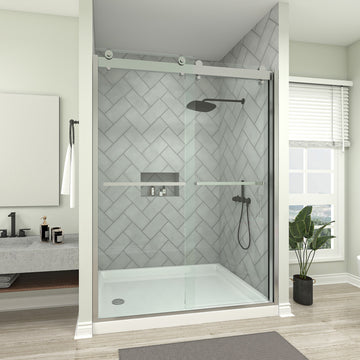
If you are already investing in quality fixtures — a new toilet, updated vanity, or new shower doors — the skirted style often ties a modern remodel together more cohesively.
Cleaning: Where the Real Difference Lives
This is where the comparison gets practical. The cleaning experience between these two toilets is genuinely different, and neither option is a clear winner for every household.
Cleaning a Skirted Toilet
The concealed trapway eliminates the curved ridges and recessed grooves that collect dust, grime, and mildew on a standard toilet. With a skirted base, you are wiping a flat surface — which takes seconds instead of minutes.
- No curves or bolt-cap crevices to scrub around
- Fewer places for dust bunnies to accumulate at the floor line
- A damp cloth or disinfecting wipe covers the entire exterior quickly
- Grout and floor around the base is easier to mop because the footprint is more defined
The trade-off: if a wax ring seal fails or there is a leak around the base, accessing the floor bolts on a skirted toilet requires more effort. Some skirted models use side-mount bolt systems that are accessible without removing the skirt, but others require partial disassembly. It is worth checking the installation design of any specific model before purchasing.
Cleaning a Standard Toilet
The exposed trapway creates several nooks that accumulate dust and moisture. Scrubbing around those curves, under the bolt caps, and along the base-to-floor joint is time-consuming — particularly in households where the toilet sees heavy use.
- The trapway ridges require a narrow brush or cloth to clean thoroughly
- Bolt caps collect grime and can discolor or crack over time
- Dust and pet hair tend to gather in the grooves at the base
- More surface area makes a thorough weekly clean take noticeably longer
The maintenance advantage here goes to repair access. When a standard toilet needs a new wax ring or the floor bolts need tightening, a plumber can reach everything without disassembling any exterior panels. This simplicity keeps service calls shorter and cheaper.
Installation Differences
Most skirted toilets require the same rough-in measurement as standard toilets (typically 12 inches in US homes, though 10-inch and 14-inch rough-ins exist). Installation steps are similar overall, but there are a few important distinctions:
- Floor bolt access: Some skirted models use a side-mount or concealed bolt system. If you are replacing an existing toilet, confirm the bolt system is compatible with your floor flange before buying.
- Sealing the base: Many skirted toilets are caulked around the entire base perimeter for a finished look, which means leaks are less visible early on. Some plumbers prefer to leave a small gap at the back on standard toilets to catch leaks early — worth discussing with your installer.
- One-piece vs two-piece: Skirted toilets come in both configurations, but one-piece skirted designs are heavier and may require two people to handle during installation.
- Cost: Expect to pay more for a skirted toilet at the same quality tier. The additional ceramic work involved in forming the skirt adds to manufacturing cost.
Price and Long-Term Value
Standard toilets remain the more affordable entry point. A quality two-piece standard toilet starts around $150–$300 at retail. Skirted toilets at comparable quality typically start around $250–$450 and go up from there for elongated bowls, soft-close seats, and dual-flush mechanisms.
From a long-term perspective, the cleaning time saved with a skirted toilet has real value. If you clean your bathroom weekly and spend five extra minutes scrubbing a standard toilet's trapway, that adds up to over four hours per year. For busy households, that arithmetic matters.
Parts availability is broader for standard toilets simply because they have been the US norm for decades. Replacement seats, flush valves, and fill valves for standard designs are available at any hardware store. Skirted toilet parts — especially proprietary flush mechanisms — may require ordering from the manufacturer or a specialty retailer.
Which One Is Right for Your Bathroom?
Use this quick framework to guide your decision:
- Choose a skirted toilet if: you want a modern, minimal look; you prioritize fast daily cleaning; your bathroom design features clean lines and contemporary fixtures; or you are renovating and can plan the installation from scratch.
- Choose a standard toilet if: your bathroom is traditional or transitional in style; you want the lowest cost of ownership including parts; you expect frequent plumbing service needs; or you are replacing an existing toilet quickly with minimal disruption.
If you are already updating other fixtures — a new bathroom vanity, fresh mirrors, or replacing an older tub — the skirted style often makes the most visual sense as part of a cohesive refresh.
FAQ: Skirted Toilet vs Standard Toilet
Are skirted toilets harder to fix when something breaks?
They can be, depending on the model. The skirt limits access to floor bolts and the base seal. Some manufacturers design skirted toilets with accessible side-mount bolt systems to reduce this problem. Always check the installation documentation for the specific model you are considering before purchasing, and ask your plumber if they have worked with that style before.
Do skirted toilets flush as well as standard toilets?
Yes. The exterior skirt is decorative and does not affect flush performance. Flush quality is determined by the bowl design, trapway size, and flush mechanism — none of which are changed by adding a concealed exterior panel. You will find both high-efficiency and standard-flush options in both styles.
Can I replace a standard toilet with a skirted toilet myself?
If you are comfortable with basic plumbing tasks, yes — but confirm your floor rough-in measurement and bolt system compatibility first. A 12-inch rough-in is standard in most US homes. Some skirted toilet models use a different bolt configuration than traditional two-bolt floor flanges, which may require an adapter or a plumber's help for a clean installation.
Ready to upgrade? Browse the full selection of modern and traditional designs in the skirted toilet collection and the elongated toilet collection at VanityArt to find the right fit for your bathroom.