
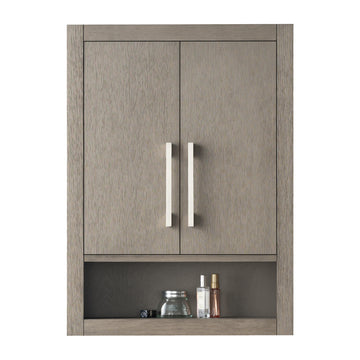
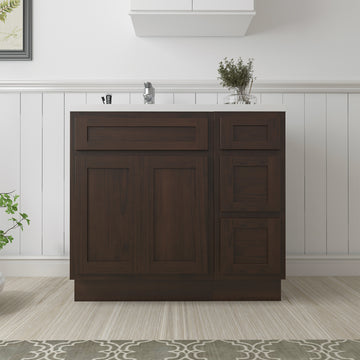


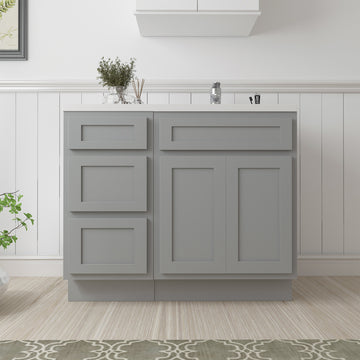
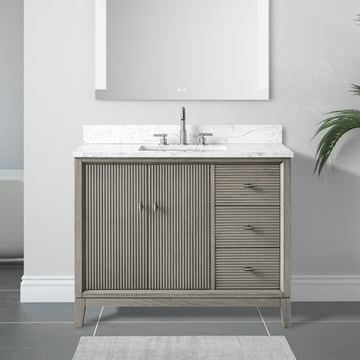















If you've been shopping for a new bathroom vanity, you've probably run into two very different product types: a complete vanity with a sink already included, and a base-only cabinet with no top. Understanding the difference between a vanity base vs vanity with sink can save you from ordering the wrong thing — and from a frustrating return process once your renovation is already underway. This guide explains exactly what a vanity base is, who it's built for, and how to decide which configuration belongs in your bathroom.
What Is a Vanity Base?
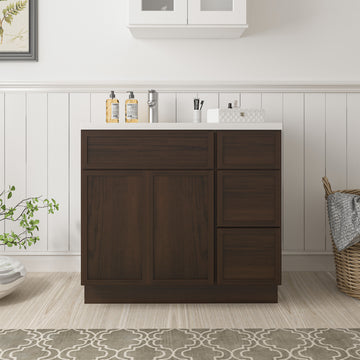
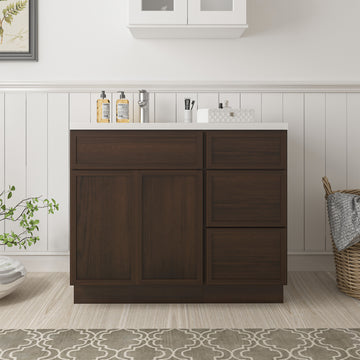
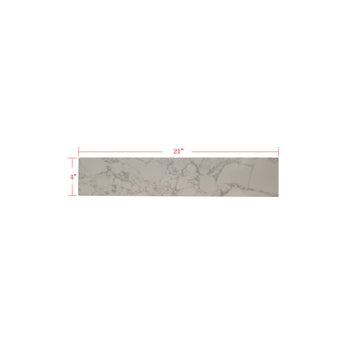
A vanity base is the cabinet portion of a bathroom vanity — the box, drawers, doors, and frame — sold without a countertop or sink. It's a standalone unit designed to accept a separately purchased top, whether that's a stone slab, a custom quartz counter, a solid surface top, or a vessel sink sitting on a flat deck.
At VanityArt, base-only units fall into two primary series:
- CVD Series — Wall-mounted (floating) vanity bases. The cabinet is designed to be anchored to studs, keeping the floor clear. Browse the CVD Serial Vanity Base collection for available sizes and finishes.
- CVJ Series — Freestanding vanity bases. These sit on the floor with legs or a toe kick, making them easier to install without locating wall studs for weight support. Browse the CVJ Serial Vanity Base collection for options.
Both series ship without a countertop, sink, or faucet. That's the point — they're engineered specifically for homeowners who want to source the top independently.
Vanity Base vs Vanity with Sink: The Core Difference
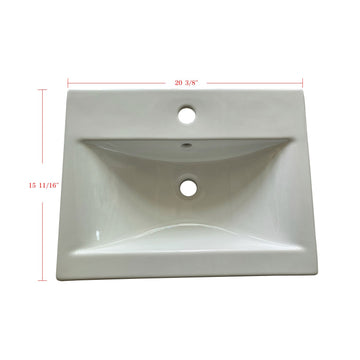
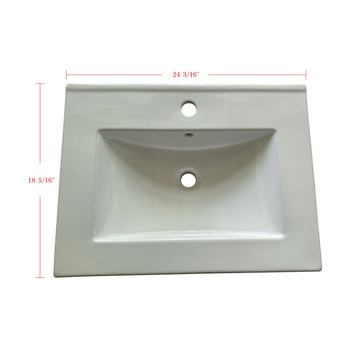
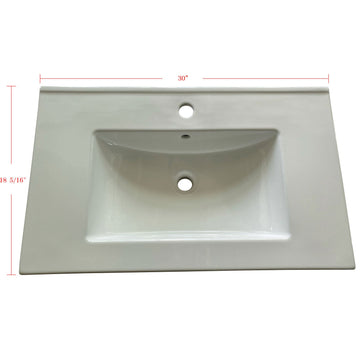
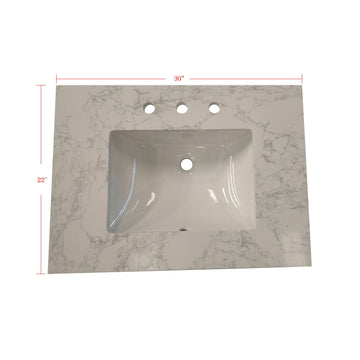
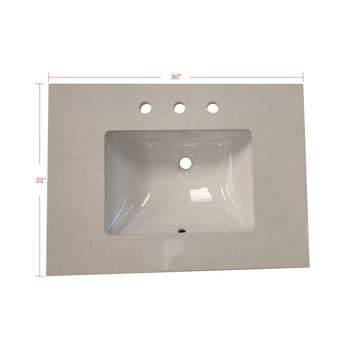
A vanity with sink arrives as a nearly complete unit. The countertop is already attached, the sink basin is integrated or pre-mounted, and all you need to do is connect the plumbing and hang a mirror. This is the more common purchase for straightforward bathroom updates.
A vanity base, by contrast, gives you just the cabinet. You are responsible for:
- Selecting and purchasing the countertop material separately
- Choosing the sink style (undermount, vessel, drop-in)
- Coordinating fabrication or finding a pre-cut top that fits the base dimensions
- Installing the top and making plumbing connections
More steps — but significantly more creative control over the finished look.
Who Actually Needs a Vanity Base?
Base-only units aren't for every project. They make the most sense in these specific situations:
- Custom countertop projects: You want quartz, marble, granite, or concrete fabricated to your exact specifications. A fabricator measures the base, cuts the slab, and installs it. The cabinet needs no top included because the top is coming from elsewhere.
- Designer or renovation contractors: Pros often buy bases in bulk and source countertops through their own suppliers at better pricing. Paying for an included top they'll discard is wasteful.
- Vessel sink installations: Many vessel sinks sit on a flat, open deck rather than a carved basin cutout. If you already own or have picked out a vessel sink, buying a base and a simple flat top (or just a base with a thick enough deck) is more practical than ripping a sink out of an included countertop.
- Matching an existing countertop: During a partial remodel, you may want to replace a worn cabinet while keeping the existing stone top. A base-only purchase is the obvious solution.
- Unique sizing requirements: Custom fabricators can cut tops to non-standard depths or lengths. A base-only cabinet gives them something to work from without you paying for a standard top you can't use.
When a Vanity with Sink Is the Better Choice
For most homeowners doing a single-bathroom refresh, a complete vanity with sink is the faster, lower-risk path. Here's why it tends to win for everyday remodels:
- Everything is engineered to fit together — no guessing about overhang dimensions or sink cutout placement.
- Lower total cost in most cases. A mid-range vanity with integrated sink is almost always cheaper than buying a base plus a fabricated stone top separately.
- Faster project timeline. No waiting on a stone fabricator's schedule.
- Simpler installation. One delivery, one set of instructions, one plumber visit.
If you're updating a guest bath, a rental property, or any space where a clean, coordinated look matters more than a one-of-a-kind countertop, browse the full vanity collection for complete units that ship ready to install.
Floating vs. Freestanding: Choosing Between CVD and CVJ
Once you've decided a base is the right call, you'll need to choose between a wall-hung unit (CVD) and a floor-standing unit (CVJ).
CVD floating bases work well when:
- Your bathroom has a small footprint and you want the floor to appear larger
- You prefer easier floor cleaning — no toe kick to mop around
- Your walls have studs in the right positions, or you're willing to add blocking during a full renovation
CVJ freestanding bases work well when:
- You're doing a surface-level remodel and don't want to open up walls
- The existing plumbing comes out of the floor rather than the wall
- You want a more traditional, furniture-style look
Both series are available in a range of widths to accommodate single and double sink configurations.
How to Measure for a Vanity Base
Getting the sizing right before you order is critical, especially when you'll be pairing the base with a custom top. Measure these four dimensions:
- Width: The horizontal span from wall to wall in the vanity alcove, or your desired vanity width in an open layout.
- Depth: Standard vanity depth is 21 inches. Some baths with tight clearance need a shallower cabinet. Confirm the base depth matches what your fabricator expects.
- Height: Standard is 32–34 inches to the top of the cabinet (before the countertop). If you're tall or prefer a comfort-height setup, confirm the base height plus countertop thickness puts the finished deck where you want it.
- Plumbing rough-in location: Know whether your drain and supply lines come out of the wall or floor. Most bases accommodate both, but verify before ordering.
Completing Your Bathroom Around the Vanity
A vanity base is usually just one piece of a larger bathroom project. Once your cabinet and countertop decision is settled, the rest of the room needs to follow. A few related categories worth exploring:
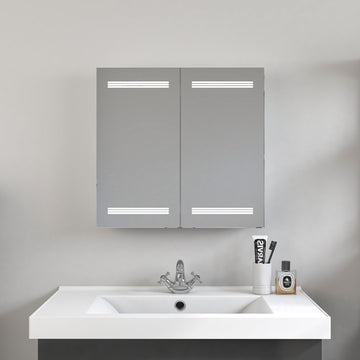
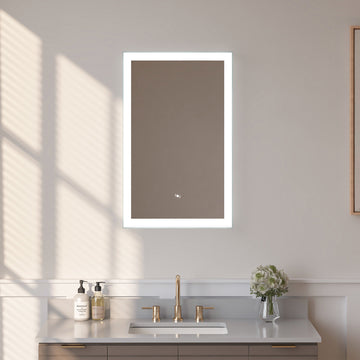
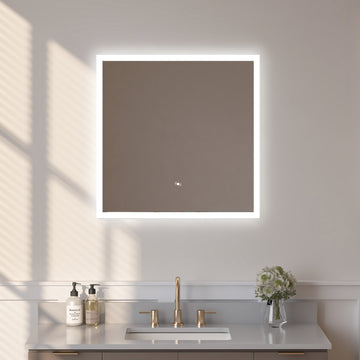
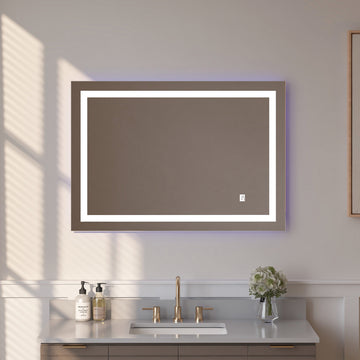
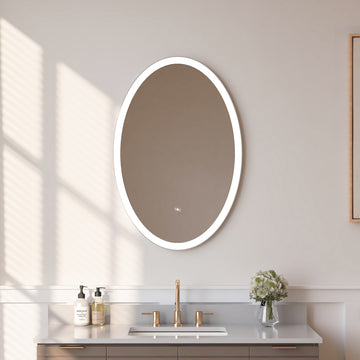
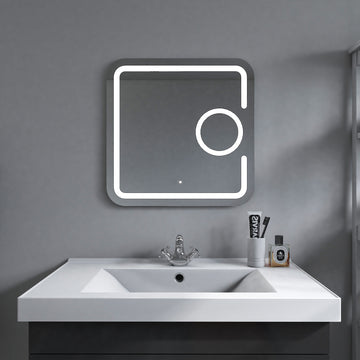
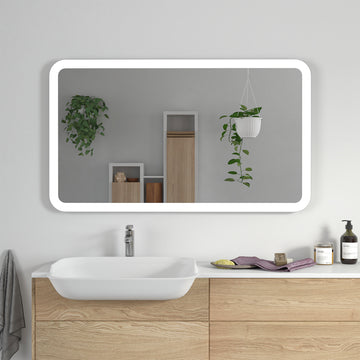
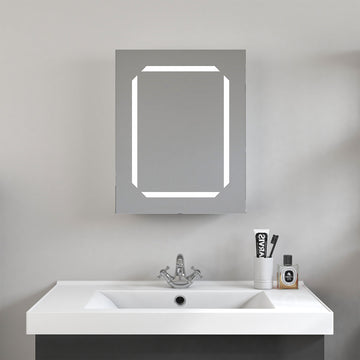
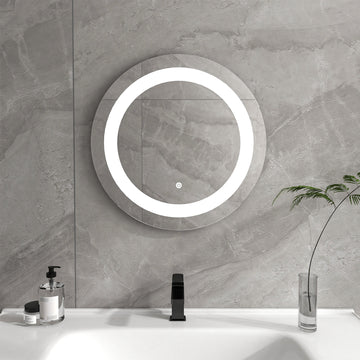
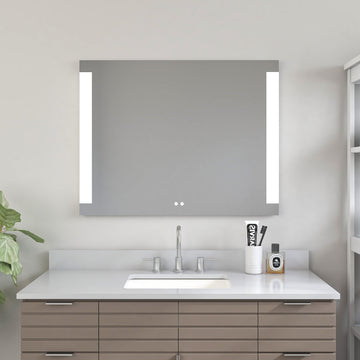
- Mirrors: A well-sized mirror anchors the vanity visually. Check the mirror collection or opt for an LED mirror if you want built-in lighting and defogging.
- Accessories: Towel bars, robe hooks, toilet paper holders, and soap dispensers all tie the look together. Browse the accessory collection to coordinate finishes.
- Toilets: If the toilet is dated, replacing it at the same time keeps the renovation efficient. The toilet collection includes elongated, skirted, and bidet-seat options.
Frequently Asked Questions
Can I use any countertop with a VanityArt vanity base?
In most cases, yes — as long as the top's depth and width are compatible with the base dimensions. Standard vanity tops are typically 22 inches deep with a 1-inch overhang on the front. If you're having a custom top fabricated, share the base's exact dimensions with your fabricator and confirm the overhang and backsplash configuration before cutting.
Do vanity bases come with soft-close hinges and drawer glides?
VanityArt's CVD and CVJ base units include soft-close hardware on doors and drawers. This is noted in individual product listings, but it's worth confirming on the specific SKU you're purchasing, since hardware specs can vary by size and configuration.
Is installation harder with a base-only unit than with a complete vanity?
The cabinet installation itself is essentially the same. What adds complexity with a base-only purchase is coordinating the countertop — scheduling a fabricator, waiting for the slab, and having it set and sealed before the plumbing can be connected. If you're comfortable managing that sequencing, or working with a contractor who is, the process is straightforward. If you want a single-delivery, single-installation experience, a complete vanity with sink is simpler.
Ready to pick your cabinet? Start with the CVD Series floating vanity bases or the CVJ Series freestanding vanity bases to find the size and finish that fits your project.