
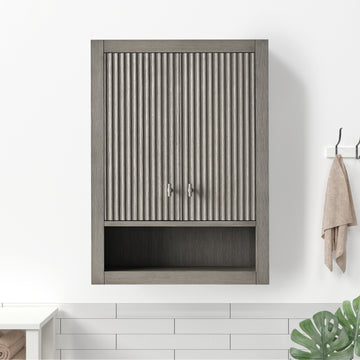
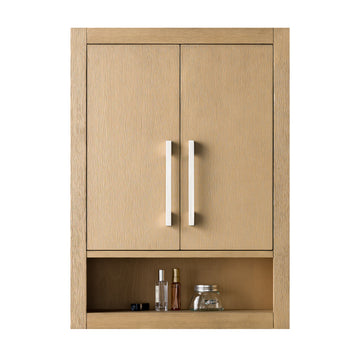
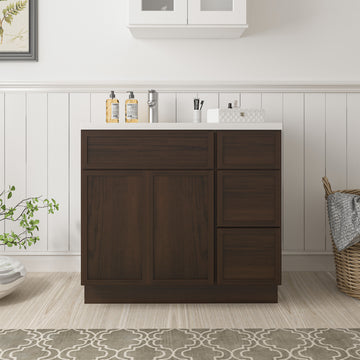
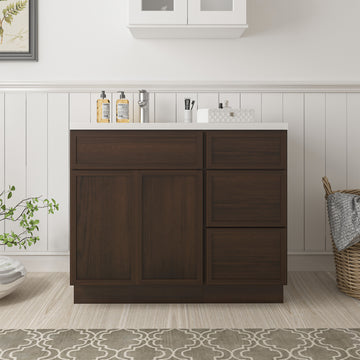
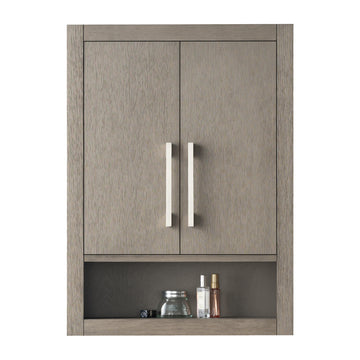
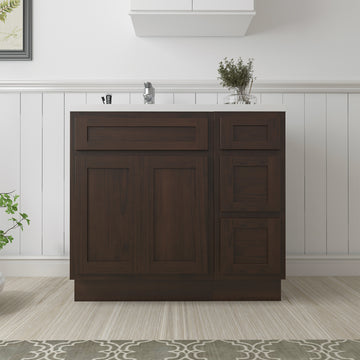

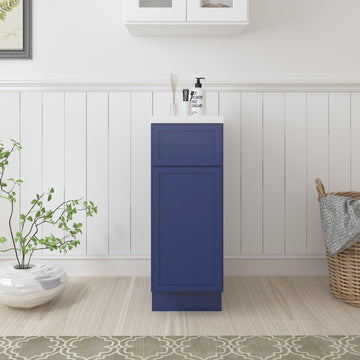
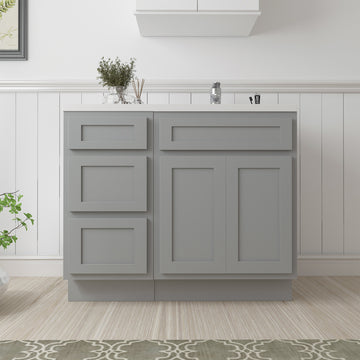
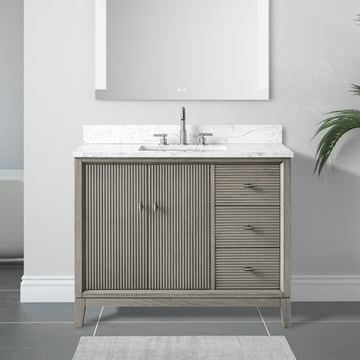
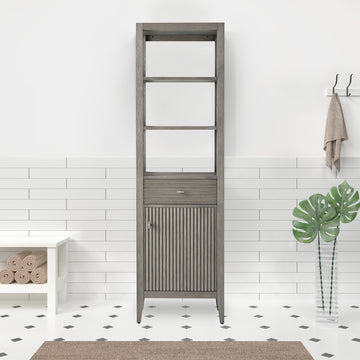


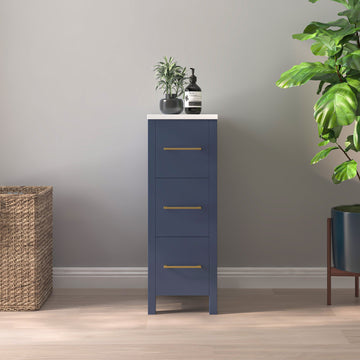
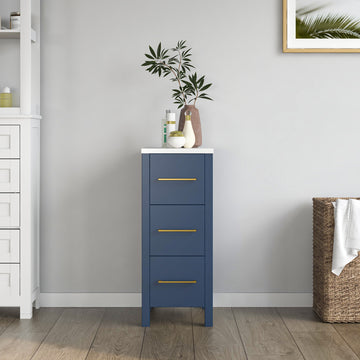






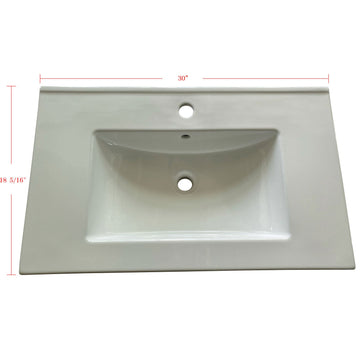
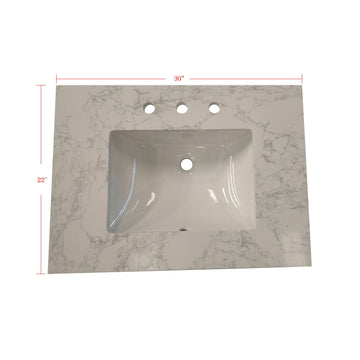
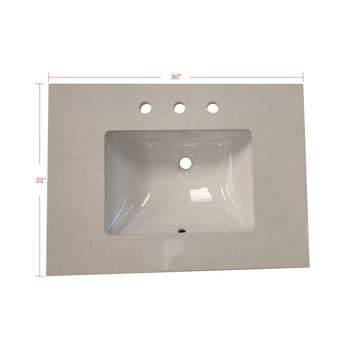
Picking the wrong vanity size is one of the most common—and most expensive—mistakes in a bathroom remodel. Doors that won't open fully, drawers that slam into the toilet, a countertop so narrow it's barely usable: all of these problems trace back to skipping a proper bathroom vanity size guide before you buy. This article maps common room dimensions to the vanity widths that actually work, so you can measure once and order with confidence.
Start With Your Room Dimensions, Not the Vanity
Before you browse styles or finishes, grab a tape measure. You need four numbers:
- Room width and length — total floor space available
- Plumbing rough-in location — where the supply lines and drain exit the wall or floor
- Door swing clearance — space the door consumes when fully open
- Toilet clearance — the National Kitchen and Bath Association (NKBA) recommends at least 15 inches from the toilet centerline to any obstruction; 18 inches is more comfortable
Write these down before you look at a single product. Every sizing decision that follows depends on them.
The Minimum Clearances You Cannot Ignore
Building codes and ergonomic standards set hard limits. Ignoring them creates a bathroom that feels cramped or fails inspection.
- 24 inches of clear floor space in front of the vanity (NKBA minimum; 30 inches preferred)
- 15–18 inches from toilet centerline to vanity side
- 21 inches clear in front of the toilet (code minimum; 30 inches is far more livable)
- 36 inches of aisle width if two people use the bathroom simultaneously
These numbers are not suggestions. Plan your vanity width only after confirming that these clearances survive on paper.
Bathroom Vanity Size Guide by Room Type
The following widths are practical starting points. Actual fit depends on your specific layout, but this mapping covers the vast majority of US bathrooms.
Powder Room (Typically 20–30 sq ft, 3×5 to 4×6 ft)
A powder room exists for guests — sink and toilet, nothing else. Space is extremely tight.
- Recommended vanity width: 18–24 inches
- A 24-inch single-sink vanity is the most common choice and leaves enough clearance on both sides
- Wall-mounted or floating styles visually open the room and make cleaning easier
- Avoid double sinks entirely — there is simply no room
If the room is on the smaller end (3×5 ft), consider a floating vanity to preserve visual floor space, or a pedestal-style unit.
Small Full Bathroom (35–50 sq ft, Typically 5×7 ft)
The standard builder bathroom in millions of US homes. The 5×7 layout is workable, but every inch matters.
- Recommended vanity width: 24–36 inches
- A 30-inch vanity is the sweet spot — wide enough for a real sink and storage, narrow enough to keep clearances intact
- A 36-inch vanity fits if the toilet is on the opposite wall and door swings away from the vanity
- Single-sink only in this footprint
- Depth matters too: standard vanities are 21–22 inches deep; a 18-inch-deep model can recover meaningful floor space
Browse single sink vanities to see the full range of widths available in this category.
Medium Bathroom (50–75 sq ft, Typically 7×8 or 8×8 ft)
This is where your options expand considerably. You can fit a larger vanity, a freestanding tub, or even a double sink if the layout cooperates.
- Recommended vanity width: 36–60 inches
- A 48-inch single-sink vanity gives generous counter space without crowding the room
- A 60-inch double-sink vanity is feasible if the toilet and door are on adjacent walls
- Confirm the plumbing rough-in: adding a second sink to a single-sink rough-in requires a plumber
- At 8×8 ft, you may also have room to consider a freestanding tub opposite the vanity wall
Large or Master Bathroom (75–120+ sq ft)
Master bathrooms give you real freedom, but oversizing a vanity still causes problems. A vanity that is too wide relative to the wall leaves no room for storage towers or linen cabinets.
- Recommended vanity width: 60–72 inches
- A 72-inch double-sink vanity is the most popular choice for master bathrooms shared by two people
- Two separate 36-inch vanities with a gap between them can work better than one long unit when plumbing is already split
- Leave at least 60 inches between opposing walls to avoid a tunnel effect
- This is the layout where a double sink vanity truly earns its place
Single Sink vs. Double Sink: A Quick Decision Framework
The choice is not just about preference — it is about plumbing position and available width.
- Single sink: bathroom under 60 inches of vanity wall space, or bathroom used by one person
- Double sink: bathroom 60 inches or wider, shared daily by two adults, plumbing supports two drain lines
- Vessel sink: good for smaller vanity footprints because the bowl sits on top, freeing up counter depth — see the vessel sink vanity collection for options
- Undermount sink: best when you want maximum usable counter surface and easy cleaning
Floating vs. Freestanding Vanities and How Size Perception Changes
Mounting style affects how large a vanity feels, not just how it looks.
- Floating (wall-mounted) vanities expose the floor beneath them, making a small bathroom read as larger. They are ideal for bathrooms under 50 sq ft. Standard mounting height is 32–36 inches to the countertop.
- Freestanding vanities sit on legs or a full cabinet base. They offer more internal storage and suit medium to large bathrooms. They also hide plumbing, which can be an advantage in older homes with exposed pipes.
- Both styles are available in the same range of widths — mounting style should be chosen after you confirm structural wall support for floating models.
The full vanity collection lets you filter by both mounting style and width to narrow your options quickly.
Don't Forget the Mirror and Accessories
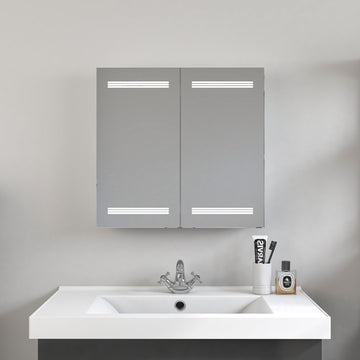
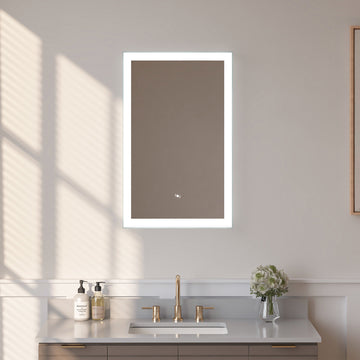
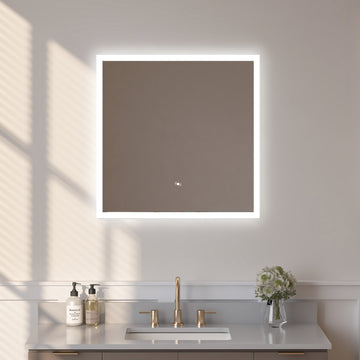
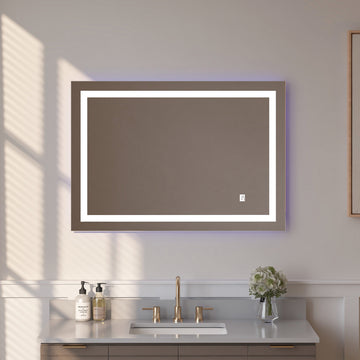
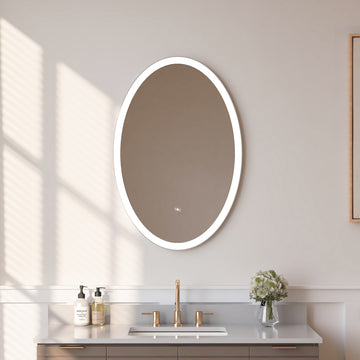
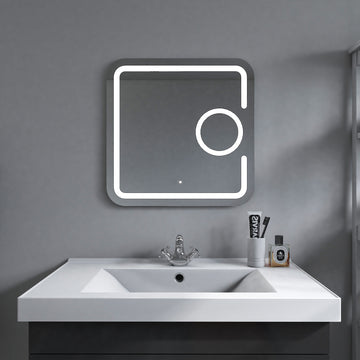
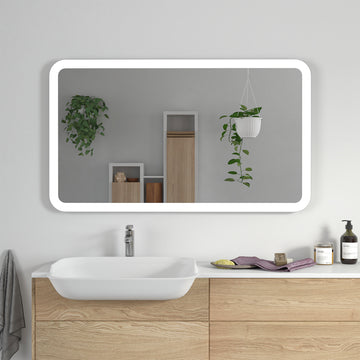
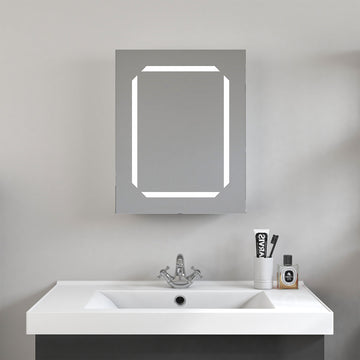
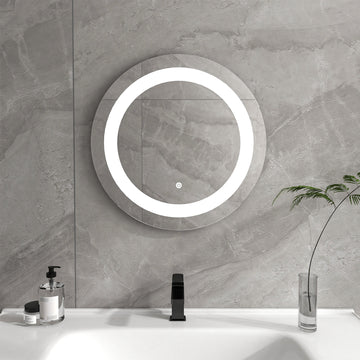
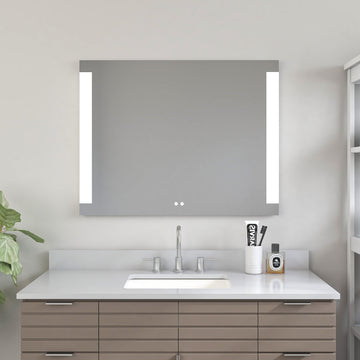
A vanity that fits perfectly on the floor can still feel wrong if the mirror above it is undersized or too large. As a general rule, the mirror width should be equal to or slightly narrower than the vanity — never wider than the vanity itself. For a 36-inch vanity, a 30–36 inch mirror is proportional. For a 72-inch double vanity, two separate mirrors often look better than one oversized panel.
Coordinating accessories — towel bars, robe hooks, toilet paper holders — should be planned at the same time so they fit the remaining wall space. A bathroom vanity is the anchor; everything else should radiate from it.
Frequently Asked Questions
What is the standard depth of a bathroom vanity?
Most bathroom vanities are 21–22 inches deep, which accommodates a standard undermount or drop-in sink. Shallower models at 18 inches are available for tight spaces. Check that the depth does not impede the door swing before ordering.
How much space should I leave between the vanity and the toilet?
Code requires a minimum of 15 inches from the toilet centerline to any side obstruction. In practice, 18 inches feels noticeably more comfortable and is the NKBA recommendation. Measure from the toilet centerline to the nearest edge of the vanity cabinet, not the countertop overhang.
Can I use a 60-inch vanity in a 7×7 bathroom?
It depends on the wall the vanity occupies and where the toilet and door are positioned. A 7×7 bathroom has 84 inches of wall length on each side. If the toilet is on an adjacent wall and the door swings outward or into a hallway, a 60-inch vanity can work. Sketch the layout to scale on graph paper first and confirm all clearances before purchasing.
Getting the size right before you fall in love with a finish or style saves time, money, and frustration. Start with your measurements, apply the clearance rules, then shop — and you will find the right fit without a single return trip. Explore the full vanities collection to find the width, style, and configuration that matches your space.