
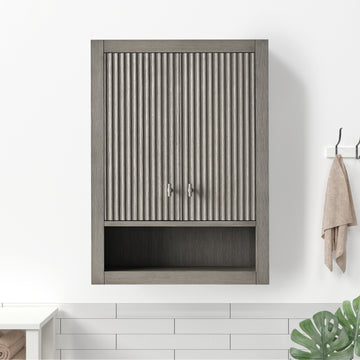
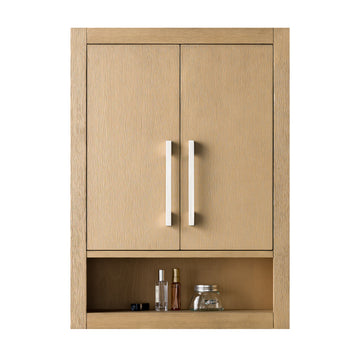
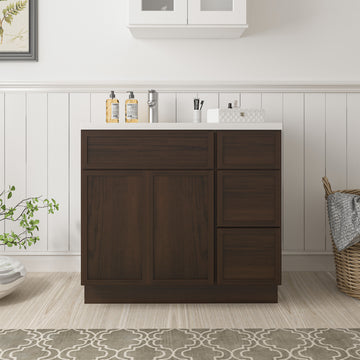
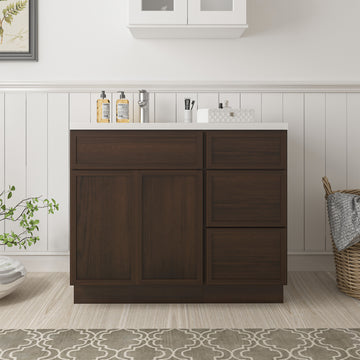
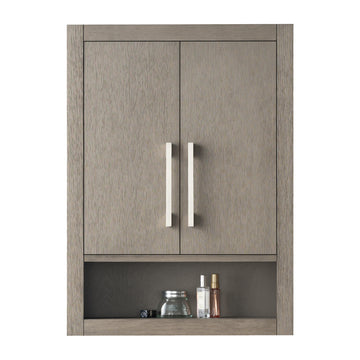
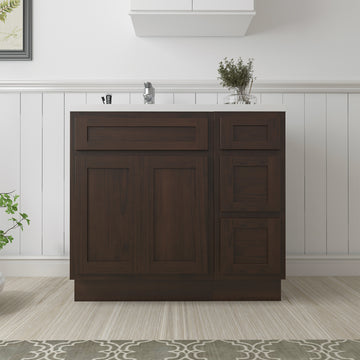

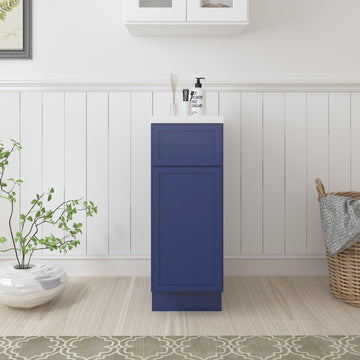
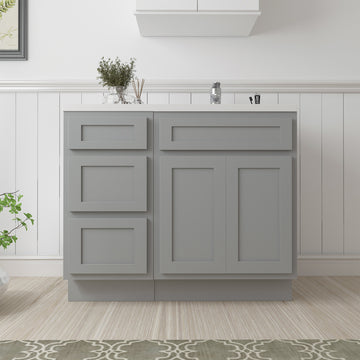











Choosing between a floating vanity vs freestanding vanity is one of the most consequential decisions in a bathroom remodel. Both styles are widely available, both look great in the right setting, and both have real trade-offs that only become obvious once you factor in your wall construction, floor space, plumbing layout, and storage needs. This guide breaks down each option honestly so you can make a confident choice before you buy.
What Is a Floating Vanity?
A floating vanity — also called a wall-mounted vanity — is anchored directly to the wall studs or a reinforced backing board, leaving the floor completely open beneath it. The cabinet has no legs and no floor contact. You choose the mounting height, which typically ranges from 32 to 36 inches from floor to countertop, though some homeowners mount them even higher for a vessel sink setup.
Floating vanities are a core part of the modern and minimalist bathroom aesthetic, and they work particularly well in smaller bathrooms where visual continuity of the floor makes the room feel larger. You can browse VanityArt's Floating Vanity collection to see current sizes and finishes.
What Is a Freestanding Vanity?
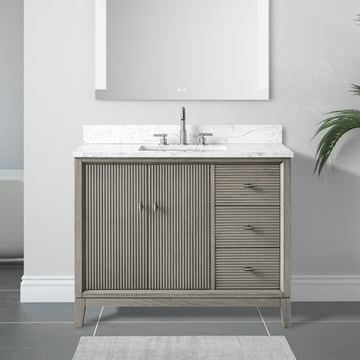
A freestanding vanity sits directly on the floor on its own base or legs. It does not require wall attachment for structural support, although many installers do secure them lightly to prevent tipping. This is the traditional vanity format that most bathrooms in older American homes were built around, and it remains the most common type sold today.
Freestanding models tend to offer more cabinet depth and a wider range of traditional, transitional, and farmhouse styles. If you want a piece that looks built-in without the complications of wall reinforcement, a freestanding vanity is worth a close look.
Floating Vanity vs Freestanding Vanity: Style Differences
Style preference is subjective, but the two types do lean toward different design languages:
- Floating vanities pair naturally with contemporary, Scandinavian, and mid-century modern bathrooms. Clean lines, handle-less drawers, and matte or wood-grain finishes are common.
- Freestanding vanities cover a broader range — from sleek frameless European designs to ornate traditional cabinets with raised panels, decorative feet, and brushed hardware.
- If your bathroom has vintage tile, classic fixtures, or a clawfoot tub, a freestanding vanity will almost always integrate more naturally.
- If you have large-format floor tile and modern fixtures, a floating vanity lets the tile run uninterrupted and reads as a more deliberate design choice.
Neither style is inherently better. The question is which one fits the room you already have — or the room you are building.
Installation Difficulty: A Realistic Comparison
This is where the two types differ most in practical terms.
Freestanding vanity installation is straightforward. You set the cabinet in place, connect the drain and supply lines, and you are done. Most experienced DIYers can complete the job in a few hours. The main variables are plumbing rough-in location and whether the floor is level.
Floating vanity installation is more involved:
- You must locate wall studs or install a dedicated backing board rated to hold the cabinet weight — typically 150 to 300 pounds once the sink, faucet, and countertop are included.
- Drywall alone cannot support a floating vanity. If your walls are standard half-inch drywall with no blocking, you will need to open the wall and add plywood or a steel mounting rail before hanging the cabinet.
- Plumbing must be roughed-in at the correct height since wall-mounted drain kits sit higher than floor-drain configurations.
- Mounting height must be decided before installation and is difficult to change afterward.
If you are working with new construction or a gut renovation, floating vanities are much easier to plan for. In an existing bathroom, the additional prep work can add cost and time to the project.
Storage Trade-Offs
Storage capacity is one area where freestanding vanities typically have an advantage.
- Freestanding cabinets usually offer more vertical interior space because they extend from the floor up, capturing the full height of the cabinet box.
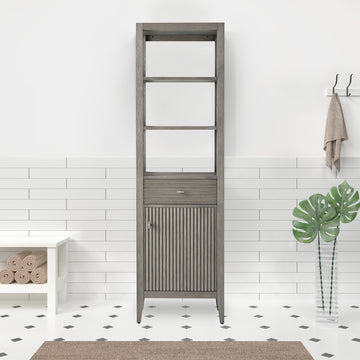
- Many freestanding models include base drawers, open shelves, and double-door cabinets in the same unit — maximizing every inch of the footprint.
- Floating vanities gain usable floor space beneath the cabinet, but that space is generally not enclosed. Open under-vanity space does not replace the drawer and shelf capacity you lose from a shallower or shorter cabinet.
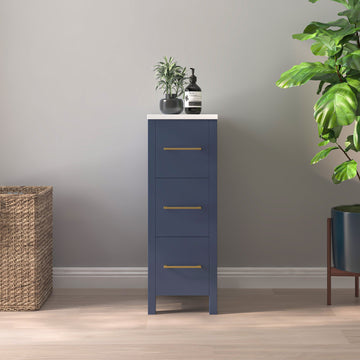
- The open floor beneath a floating vanity is easier to clean — no base trim to mop around — and makes the bathroom feel less cluttered, but it does not store anything unless you add a floating cabinet or other wall-mounted storage nearby.
For bathrooms with limited square footage and no linen closet, a full-depth freestanding vanity with integrated storage often serves families better than a streamlined floating unit.
Cleaning and Maintenance
The open floor under a floating vanity makes sweeping and mopping easier — there is no base or kick plate for hair and debris to collect against. This is a genuine everyday convenience that is easy to underestimate.
Freestanding vanities have a base that sits at or near the floor. Dust, hair, and moisture can accumulate along the base edge, and some freestanding models with decorative feet are harder to clean thoroughly around the legs.
On the cabinet surfaces themselves, maintenance is similar for both types. Quality finishes — whether it is a painted MDF, solid wood, or thermofoil wrap — should be wiped down regularly with a damp cloth and mild cleaner. Avoid standing water near the base of any vanity.
Cost Considerations
Purchase price for comparable sizes and finishes is often similar between the two types. Where costs diverge is in installation.
- Freestanding vanity installation labor runs lower because wall prep is rarely needed.
- Floating vanity installation can cost more if wall blocking must be added, especially in a finished bathroom where opening and patching the wall is required.
- If your plumbing is not already set up for a wall-mounted drain, adding one increases cost further.
- Long-term, there is no meaningful difference in maintenance or replacement cost between the two styles.
If budget is a priority and you are not doing a full renovation, a freestanding vanity is typically the more economical choice for an existing bathroom.
Which One Should You Choose?
Use this as a quick decision guide:
- Choose a floating vanity if: you are doing a full renovation or new construction, your walls have or will have proper blocking, you want a modern look, you have larger floor tile you want to show off, or accessibility (adjustable height for wheelchair clearance) matters.
- Choose a freestanding vanity if: you are updating an existing bathroom without opening walls, you need maximum storage, your design style leans traditional or transitional, or you want a simpler DIY-friendly installation.
Both types are available in single sink and double sink configurations, so size is not a limiting factor in either direction. If you want to see the full range of options in one place, the VanityArt Vanities collection includes both styles across dozens of sizes and finishes.
Frequently Asked Questions
Can I install a floating vanity without opening my wall?
In most cases, no. A floating vanity requires solid anchor points — typically wall studs or a plywood backing board — capable of supporting 150 to 300 pounds. Standard drywall alone will not hold. If your wall already has blocking from a previous wall-mounted installation, you may be able to work with what is there, but most existing bathroom walls will need some modification before a floating vanity can be safely mounted.
Do floating vanities make a small bathroom look bigger?
They can, yes. Exposing the floor beneath the vanity allows the eye to travel further across the room, which creates a perception of more space. This effect is most noticeable in bathrooms under 50 square feet, particularly when combined with large-format floor tile and a wall-hung toilet or compact fixtures.
Are freestanding vanities less sturdy than floating vanities?
Not inherently. A well-constructed freestanding vanity with a solid wood or plywood box is extremely durable. A floating vanity that was poorly mounted — into drywall without proper blocking — is far less stable than a quality freestanding unit sitting flat on the floor. Sturdiness depends more on construction quality and proper installation than on the mounting style itself.
Ready to compare specific models side by side? Browse the full VanityArt Vanities collection to find the right size, style, and configuration for your bathroom.