
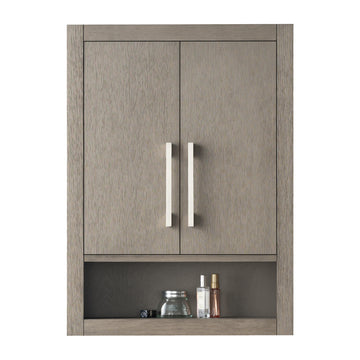
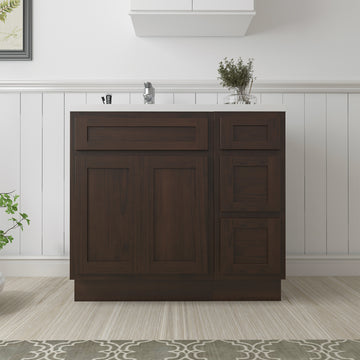

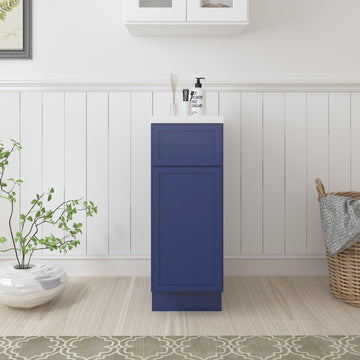
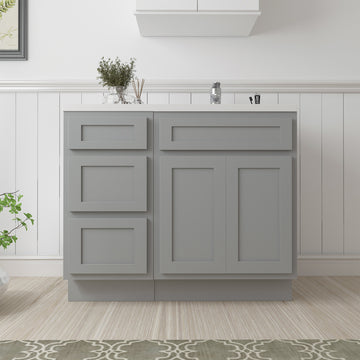
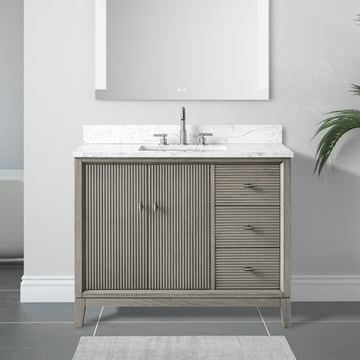
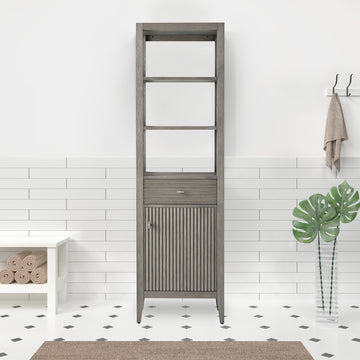










Choosing the right mirror for your vanity is one of the most impactful decisions you can make in a bathroom remodel. The best bathroom vanity with mirror ideas do more than look good in a photo — they account for your room's proportions, your vanity's finish, your lighting conditions, and how you actually use the space every morning. This guide walks you through the key decisions so you end up with a combination that works visually and functionally.
Start with Your Bathroom's Size and Layout
Before you fall in love with a mirror style, measure your bathroom. The size of the room directly affects what mirror format is appropriate.
- Small bathrooms (under 50 sq ft): A large frameless mirror or a wide medicine cabinet mirror creates the illusion of more space. Avoid ornate, bulky frames that close in the room visually.
- Medium bathrooms (50–100 sq ft): You have more flexibility. Framed mirrors, mirror panels, and backlit options all work. The vanity width should guide the mirror width.
- Large bathrooms (over 100 sq ft): A single small mirror can look lost. Consider a wide mirror that spans most of the vanity, or two mirrors over a double sink vanity.
As a general rule, the mirror should be 2–4 inches narrower than the vanity on each side. Going wider than the vanity pulls the eye away from the fixture and can feel unbalanced.
Match Mirror Style to Your Vanity Finish
This is where most planning goes wrong. A mismatch between the mirror frame and the vanity hardware finish creates visual noise even when everything is technically "nice." Here is how to get the pairing right.
- White or gray vanities: Almost anything works, but matte black frames, brushed nickel, and natural wood tones are especially clean pairings. A frameless mirror also reads as very crisp against white cabinetry.
- Dark wood or espresso vanities: Warm metal frames (brushed gold, antique bronze) or frameless mirrors complement the richness without competing. Avoid chrome, which can look cold against dark wood.
- Navy or forest green vanities: Polished brass or matte black frames work exceptionally well. A simple arch-top mirror adds shape without over-decorating.
- Natural wood or bamboo vanities: Stick to organic materials or frameless options. A thin metal frame in a warm tone can work, but avoid anything highly polished.
If your vanity already comes with hardware, pull that finish directly into your mirror frame selection. Matching two metals exactly is not required — mixing brushed and matte finishes within the same metal family (like brushed gold and matte gold) reads as intentional and layered.
Understand the Different Mirror Types
Not all bathroom mirrors serve the same purpose. Knowing the categories helps you narrow down fast.
- Flat framed mirrors: The most common type. Available in every finish and price range. Works in traditional, transitional, and modern bathrooms.
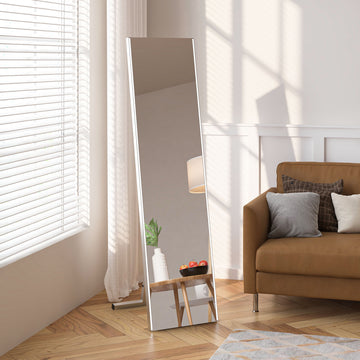
- Frameless mirrors: Clean and versatile. Ideal for contemporary or minimalist spaces. They recede visually, which is useful in tight rooms.
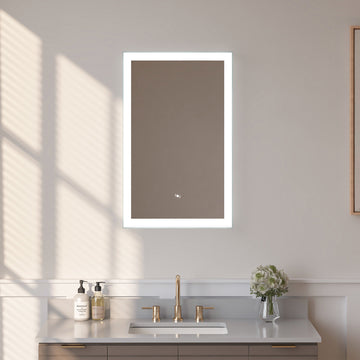
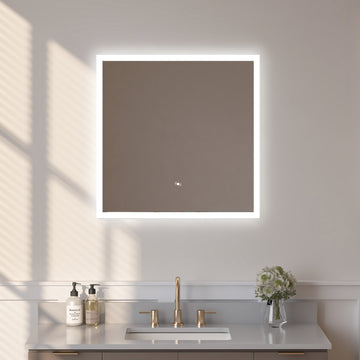
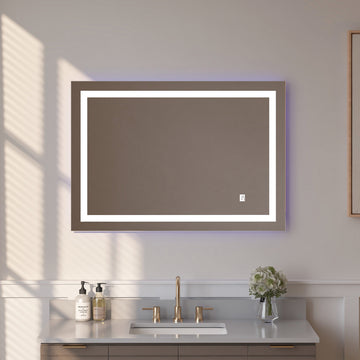
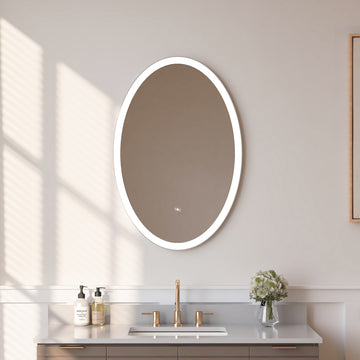
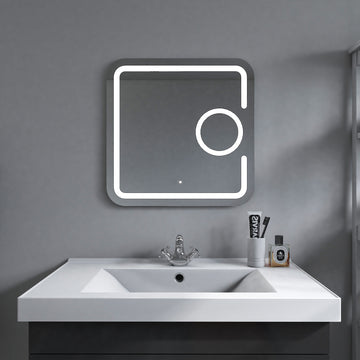
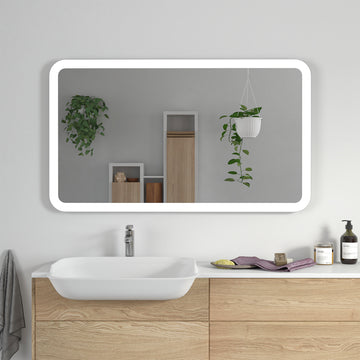
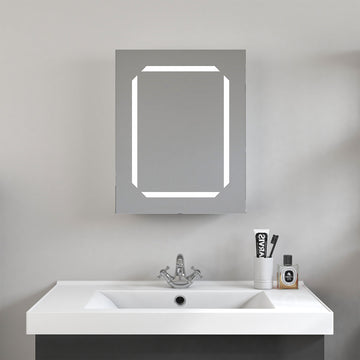
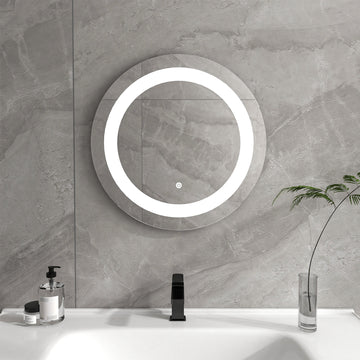
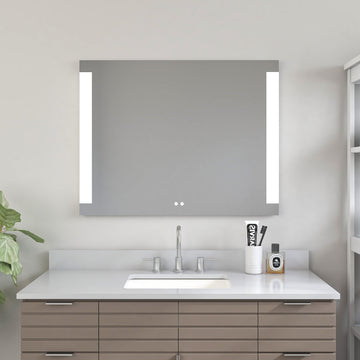
- LED backlit mirrors: Provide even, shadow-free lighting for grooming tasks. The built-in light reduces or eliminates the need for separate vanity sconces. Browse LED mirrors to see how much variety exists within this category alone.
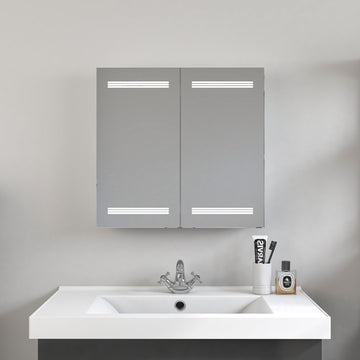
- Medicine cabinet mirrors: Combine storage with reflection. A smart choice for small bathrooms where counter space is limited.
- Arched or shaped mirrors: Add architectural interest. Best when the vanity lines are simple and rectangular, so the shapes contrast without clashing.
If you want both style and function in one purchase, explore the full mirror collection where you can filter by size, shape, and feature.
How Lighting Changes Everything
A mirror that looks great in the showroom can perform poorly in your specific bathroom if the lighting setup does not support it. Consider these factors:
- Natural light: If a window is adjacent to or opposite the mirror, a frameless or lightly framed mirror will not compete with that light source. A heavily framed mirror can block or absorb light.
- Overhead-only lighting: Creates shadows under the eyes and chin. An LED backlit mirror compensates for this and is a practical upgrade over adding sconces.
- Side sconces: The classic setup for even facial lighting. If you plan to use sconces, the mirror should sit between them. Size your mirror to fill that space without crowding the fixtures.
- Damp rating: Any mirror in a bathroom with a shower nearby needs to be rated for damp or wet environments. This is especially important for LED mirrors with electrical components.
Single vs. Double Vanity Mirror Configurations
For a single sink vanity, one mirror centered above the sink is the standard approach. The main decision is shape and size relative to the vanity width.
For a double sink setup, you have two real options:
- One wide mirror: Spans the full vanity. Creates a unified, hotel-like look. Works best in bathrooms with high ceilings where the horizontal span does not feel overwhelming.
- Two individual mirrors: One centered above each sink. Feels more personal. Gives each user their own defined space. Works well when the vanity has a visible center section between the sinks.
If you choose two mirrors, keep them identical in size, shape, and frame finish. Mixing different mirror styles over a double vanity rarely works unless the design is very deliberately asymmetrical.
Coordinating the Mirror with the Rest of the Bathroom
The mirror does not exist in isolation. It shares the room with your tile, fixtures, and accessories. A few practical coordination tips:
- If your tile grout or flooring has warm undertones, warm-toned mirror frames (brass, bronze, wood) will feel cohesive.
- If your faucet finish is brushed nickel, a silver-toned or frameless mirror keeps the metal palette consistent. Mixing too many different metal finishes across faucet, mirror frame, towel bars, and hardware creates a disjointed look.
- Consider the toilet and any other fixtures in the room. If you have a contemporary elongated toilet and a wall-mounted floating vanity, a chunky traditional mirror frame will feel out of place.
- Shower hardware finish should ideally match the vanity hardware finish. If both are consistent, the mirror frame has a clear family to join.
Practical Installation Considerations
Even a perfectly chosen mirror can cause headaches if the installation is not thought through in advance.
- Height placement: The center of the mirror should sit at approximately eye level for the primary users. A general starting point is 60–65 inches from the floor to the mirror's center. Adjust if household members vary significantly in height.
- Electrical rough-in: If you are choosing an LED backlit mirror, confirm that an electrical outlet or hardwire connection is planned behind the mirror location before drywall is finished.
- Wall stud location: Large, heavy mirrors need to anchor into studs or use appropriate wall anchors. Know your wall construction before purchasing a mirror that exceeds 30–40 lbs.
- Gap from vanity top: Leave 4–8 inches between the top of the backsplash or faucet and the bottom of the mirror. Too little space feels cramped; too much creates a disconnected look.
Buying a Vanity and Mirror as a Set
One reliable way to guarantee the mirror and vanity work together is to purchase them as a coordinated set. Many collections are designed with matched proportions, finishes, and hardware so the pairing is already resolved. This is especially useful if you are remodeling on a timeline and do not want to spend hours sourcing individual pieces. Browse vanity sets with mirror to see options where the design work is done for you, or explore the best selling bathroom vanity combinations that other homeowners have already validated.
Frequently Asked Questions
How wide should a bathroom mirror be relative to the vanity?
The mirror should generally be slightly narrower than the vanity — about 2 to 4 inches less on each side. For example, a 48-inch vanity pairs well with a 40- to 44-inch mirror. Going wider than the vanity can look unbalanced unless you are intentionally spanning a larger wall section with a full-width mirror.
Can I mix a frameless mirror with a vanity that has decorative hardware?
Yes. A frameless mirror is neutral enough to work with almost any vanity style. It recedes visually and lets the vanity's hardware and cabinet design be the focal point. This is actually a good strategy when your vanity has strong decorative details and you do not want the mirror to compete with them.
Do LED mirrors work well in small bathrooms?
LED mirrors are an excellent choice for small bathrooms. They eliminate the need for separate sconces, freeing up wall space. The built-in light also makes the mirror itself feel like it is glowing rather than sitting heavily on the wall, which keeps the visual weight low — a real advantage in a compact room.
Ready to find the right combination for your space? Start with the CVB Serial bathroom vanity with mirror collection for coordinated sets designed to take the guesswork out of pairing.