

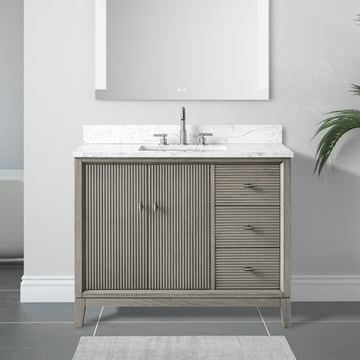
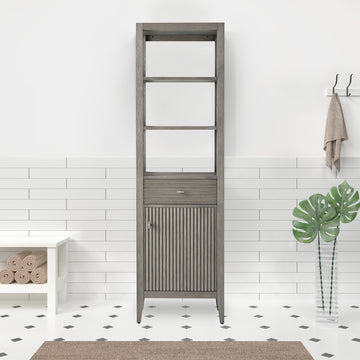


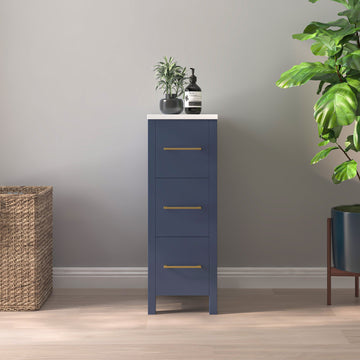
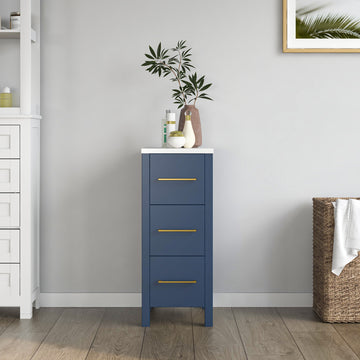







A well-styled double sink vanity can completely change the feel of a master bathroom—turning a purely functional space into something that genuinely looks and works like a luxury retreat. Whether you are renovating from scratch or refreshing what you already have, these double sink vanity ideas focus on the three elements that matter most: mirror placement, lighting, and countertop material. Get those three right, and everything else falls into place.
Start With the Right Vanity Proportions
Before you style anything, the vanity itself needs to fit the room. A double sink vanity typically runs between 60 and 72 inches wide, though 84-inch and 96-inch options exist for larger bathrooms. The rule of thumb is to leave at least 30 inches of clear floor space on each side and a minimum of 36 inches between the vanity and any opposing wall or fixture.
- 60–72 inches: Works well in standard master baths with two people sharing the space.
- 72–84 inches: Gives each user generous elbow room and storage on both sides.
- 84 inches and above: Best suited for spa-style bathrooms with open floor plans.
Floating styles are especially popular right now because they visually open up the floor, making even mid-size bathrooms feel more spacious. Browse the Double Sink Vanity collection to compare widths, finishes, and sink configurations before committing to a layout.
Mirror Placement: Sizing and Positioning Done Right
Mirrors are one of the most commonly misjudged elements in bathroom design. The two most frequent mistakes are hanging them too high and choosing mirrors that are too small for the vanity below.
Height: The center of each mirror should sit at roughly eye level—typically 57 to 65 inches from the finished floor, depending on the household. If two people of different heights share the vanity, aim for 60 inches as a reliable middle ground.
Width: Each mirror should be no wider than the sink cabinet section it serves. For a 72-inch vanity with two 18-inch sink bowls, two mirrors in the 24–30 inch range work well. Going edge-to-edge with one large mirror is also a strong choice, but make sure it doesn't extend past the vanity's outer edges.
Two mirrors vs. one: Two individual mirrors create a more symmetrical, furniture-like look and leave room for wall sconces between them. A single long mirror reads as sleeker and more contemporary. Either approach works—just be consistent with the rest of your design choices.
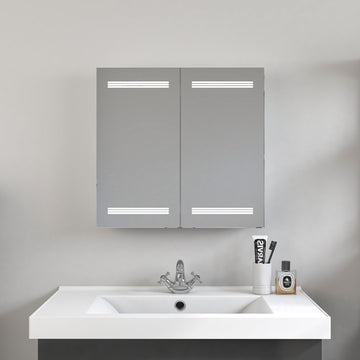
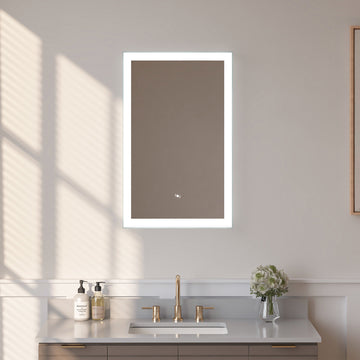
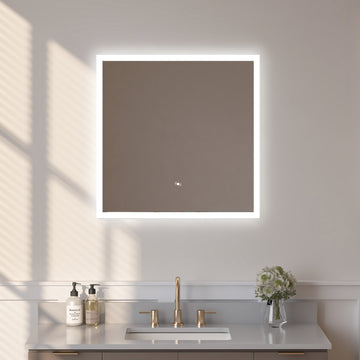
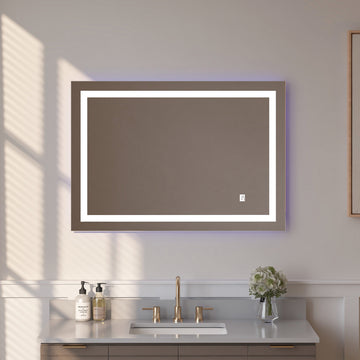
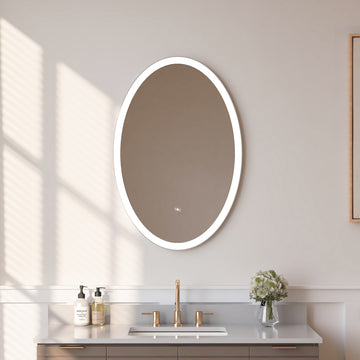
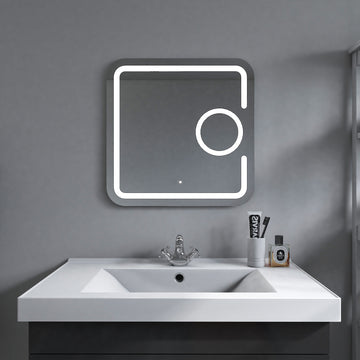
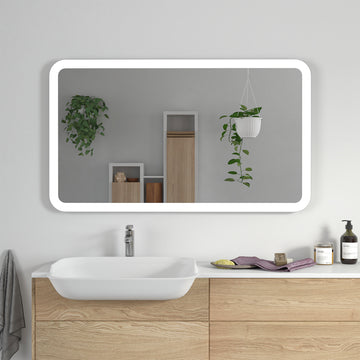
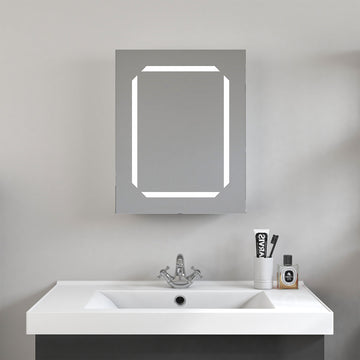
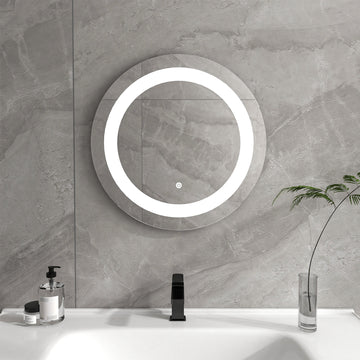
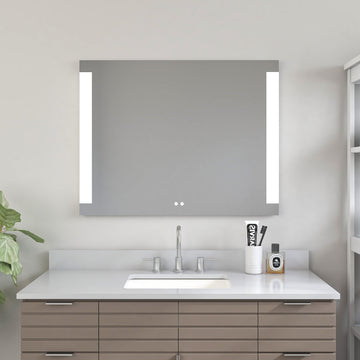
For a high-end finish, consider backlit or LED options. They eliminate harsh shadows on the face and reduce the need for additional task lighting. The LED Mirror collection includes several sizes suited to double vanity setups.
Sconce Lighting: Position and Scale
Overhead recessed lighting alone is rarely enough above a vanity. It casts downward shadows on the face—exactly the opposite of what good grooming light requires. Sconces mounted at face level, flanking each mirror, are the gold standard.
- Mounting height: Center sconces at 60–65 inches from the floor, aligned with the middle of the mirror.
- Spacing: Mount sconces 28–36 inches apart (center to center) above each sink for balanced, shadow-free light.
- Bulb type: Use bulbs with a color temperature of 2700K–3000K. This range mimics natural daylight closely enough for accurate grooming without being harsh.
- Scale: Sconce fixtures should be roughly one-third the height of the mirror they flank—too large and they overpower the space; too small and they disappear visually.
If you prefer a cleaner wall with no sconce hardware, a single LED mirror with integrated side lighting can serve the same purpose. Just make sure the light output is rated at least 1,000 lumens per mirror to be genuinely useful rather than just decorative.
Countertop Materials: What Actually Works in a Luxury Bath
The countertop surface is what guests notice immediately, and it is also where daily wear and tear is most visible. Here is how the most popular materials stack up for a double vanity setting.
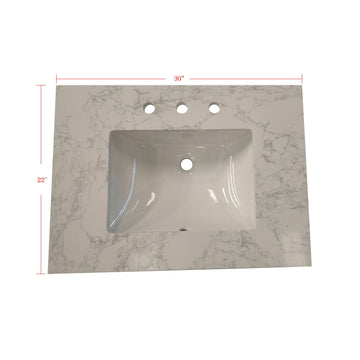
- Quartz: The most practical luxury option. Non-porous, scratch-resistant, and available in a wide range of finishes including convincing marble lookalikes. Requires almost no maintenance.
- Marble: Undeniably beautiful but genuinely high-maintenance. It stains from toothpaste, acidic cleaners, and standing water if not sealed regularly. Best reserved for lower-traffic bathrooms or homeowners willing to be diligent about upkeep.
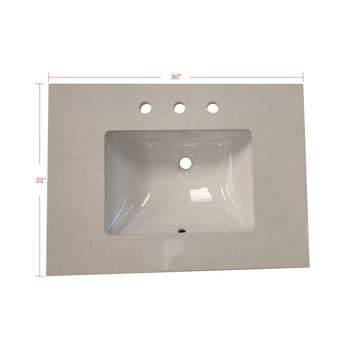
- Engineered stone: Sits between quartz and natural stone in terms of cost and maintenance. Durable and consistent in patterning—good for matching two separate slabs across a long vanity run.
- Solid surface (Corian-style): Seamless appearance, easy to clean, and repairable if scratched. Less dramatic visually than stone but very functional.
- Concrete: Works well in industrial or organic design styles. Requires sealing and can show hairline cracks over time. Best for homeowners who value aesthetic over zero-maintenance.
Whatever material you choose, specify a thickness of at least 3/4 inch for a substantial, high-end look. Thinner tops can feel and look budget-grade regardless of the material itself.
Hardware Finishes That Tie the Room Together
Cabinet hardware, faucets, and towel bars should all speak the same finish language. Mixing metals is acceptable—and increasingly popular—but it works best when one finish is dominant and a second is used as an accent, not split evenly.
- Matte black: High contrast against white or light wood vanities. Shows water spots less than polished finishes.
- Brushed nickel: Versatile, hides fingerprints well, and pairs with nearly any cabinet color.
- Unlacquered brass: Warm and distinctive, but develops a natural patina over time. This is a feature to some homeowners and a drawback to others.
- Polished chrome: Classic, highly reflective, and easy to find across all fixture categories for a cohesive look.
Apply the same finish logic to your mirror frames and sconce fixtures. Consistency here is what separates a thoughtfully designed bathroom from one that simply has nice individual pieces.
Storage Styling Below the Countertop
A double vanity gives each person their own cabinet zone, which is one of its biggest practical advantages. To keep it feeling intentional rather than cluttered, treat the cabinet interiors and any open shelving as part of the overall design.
- Use matching storage containers or baskets inside open-shelf vanities to keep everyday items out of sight.
- Reserve one drawer per sink for daily-use items only—this keeps countertops clear.
- If the vanity has legs or is wall-mounted, the floor space beneath it is valuable. A small stool or neatly placed woven basket reads as intentional styling rather than dead space.
If storage is a priority alongside style, a floating vanity with a full-depth drawer stack on each side is one of the most functional configurations available.
Coordinating the Broader Bathroom Design
The vanity wall is only one part of a luxury bathroom. For the room to feel cohesive, the other fixtures need to be chosen with the same level of care.
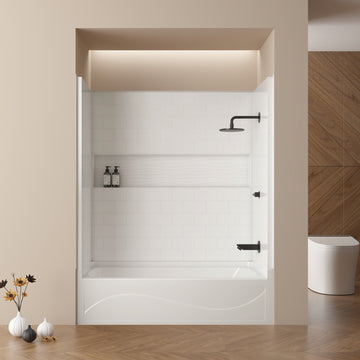
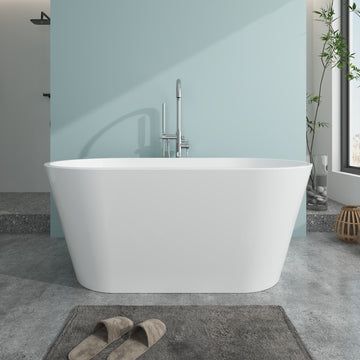
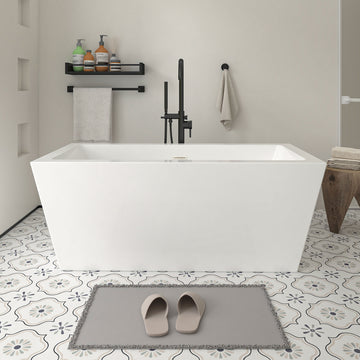
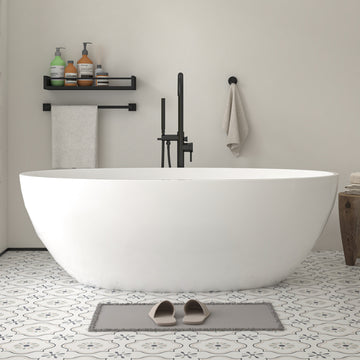
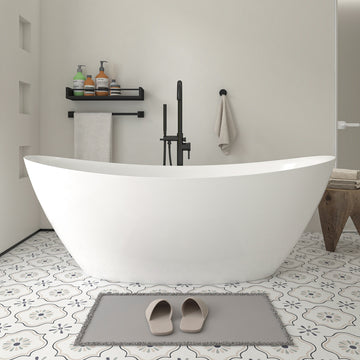
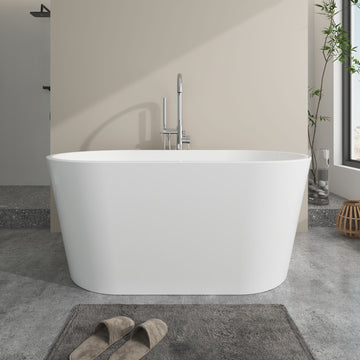
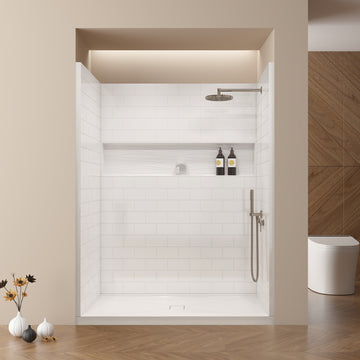
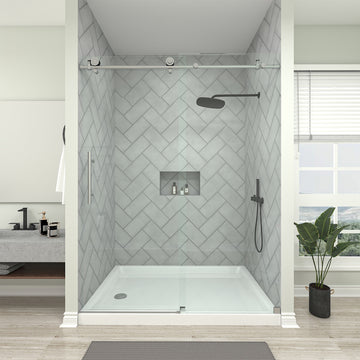
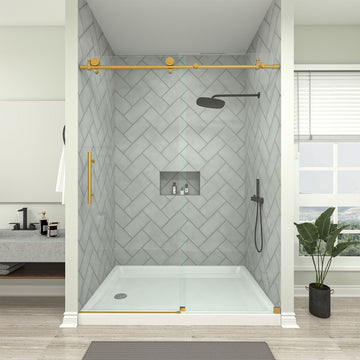
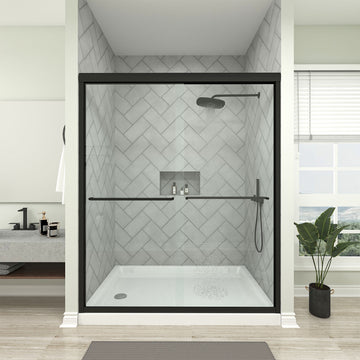
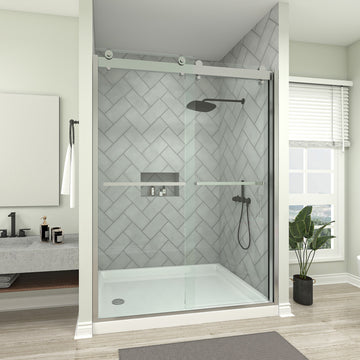
If you have room for a freestanding tub, placing it opposite or adjacent to the vanity creates a natural focal point and reinforces the spa aesthetic. A frameless glass shower door keeps the space visually open and lets tile work show through instead of being blocked by a frame. Simple, elongated fixtures at the toilet—ideally skirted to hide the trapway—complete a clean, high-end look without drawing attention away from the vanity area.
For the vanity wall itself, large-format tile (24x24 or larger) behind the mirrors reduces grout lines and creates a more seamless, upscale surface. Vertical tile patterns draw the eye upward and make ceiling heights feel taller.
Common Double Sink Vanity Styling Mistakes to Avoid
- Overcrowding the countertop with products and decorative objects—two to three items maximum per sink zone.
- Choosing mirrors that are too small for the vanity width, which makes the wall look unfinished.
- Installing only overhead lighting with no face-level task lighting.
- Mismatching the cabinet finish with the floor tile undertones (warm wood with cool gray tile rarely looks intentional).
- Ignoring plumbing rough-in locations when choosing a new vanity—always confirm drain and supply line positions before purchasing.
Frequently Asked Questions
What size mirror works best above a double sink vanity?
For most double vanities, two mirrors between 24 and 36 inches wide work well—one centered above each sink. If you prefer a single mirror, size it to match the width of the vanity cabinet without extending past the outer edges. Maintain a 4–8 inch gap between the top of the faucet and the bottom of the mirror.
Should sconces go on the side of the mirror or above it?
Side-mounted sconces at face height (60–65 inches from the floor) provide the most even, flattering task lighting because they illuminate the face from both sides with minimal shadow. Above-mirror sconces are acceptable when side mounting isn't possible, but position them no more than 75–80 inches from the floor to avoid casting downward shadows.
Which countertop material requires the least maintenance for a busy master bath?
Quartz is the most maintenance-friendly choice for a high-use master bathroom. It is non-porous, does not require sealing, and resists staining from common bathroom products. Engineered stone is a close second. Natural marble and concrete both require regular sealing and more careful daily cleaning to stay looking their best.
Ready to start your project? Explore the full range of styles and sizes in the Double Sink Vanity collection at VanityArt to find the right foundation for your luxury bathroom design.