









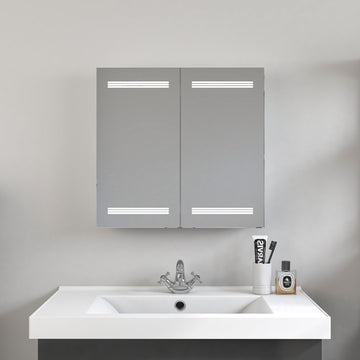
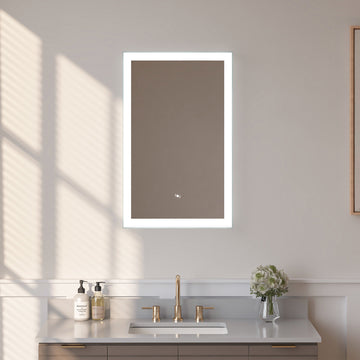
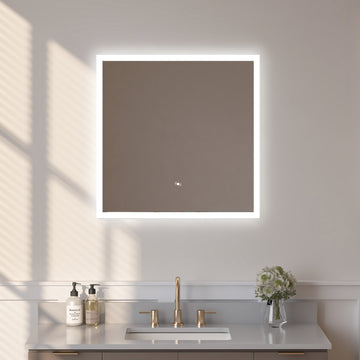
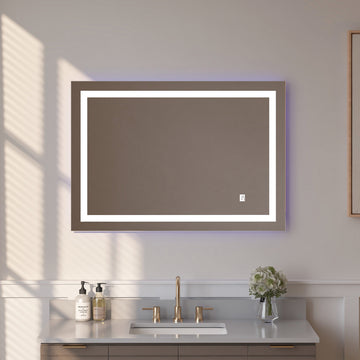

When you're getting ready in the morning, the mirror you use matters more than most people realize. The debate of LED mirror vs regular mirror comes down to three practical factors: how well you can actually see yourself, what it costs to run over time, and whether you're tired of wiping condensation off the glass after every shower. This guide breaks down both options honestly so you can make a smart decision for your bathroom.
What Is an LED Mirror?
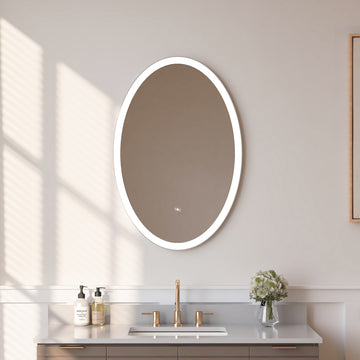
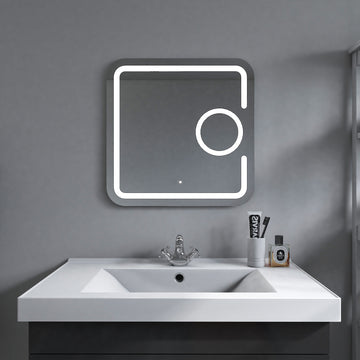
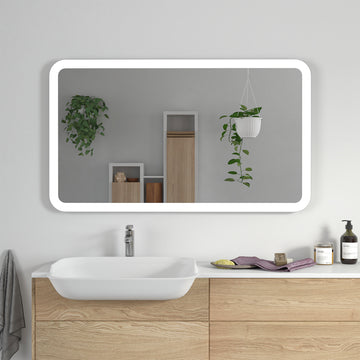
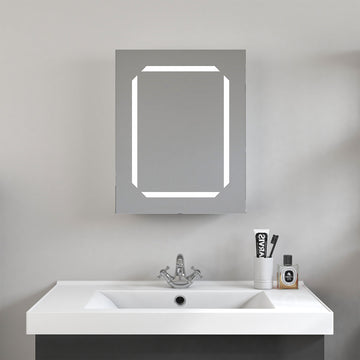
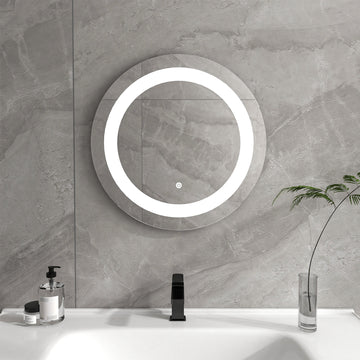
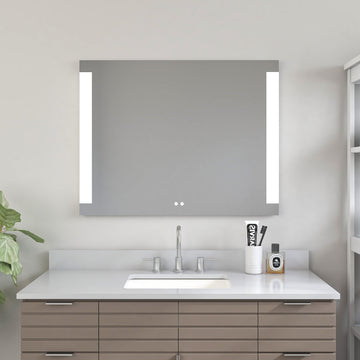
An LED mirror is a mirror with built-in light-emitting diode strips integrated into the frame, behind a frosted edge, or embedded behind the mirror face itself. Most LED bathroom mirrors include a hardwired or plug-in connection, a touch or motion sensor switch, and often a dimmer function. Some models add a digital clock, color temperature adjustment, or a built-in defogger pad. They look sleek, they mount flush to the wall, and they eliminate the need for a separate light fixture directly above or beside the mirror.
What Counts as a Regular Mirror?
A regular bathroom mirror is a simple silvered-glass mirror, framed or frameless, without any integrated lighting or electrical components. It relies entirely on your bathroom's existing light fixtures — overhead recessed lights, a vanity bar above the mirror, or side sconces — to illuminate your face. Regular mirrors are widely available, come in every size and frame style imaginable, and require no electrical work to install beyond hanging hardware.
LED Mirror vs Regular Mirror: Lighting Quality
This is where the difference is most noticeable day to day. Overhead lighting, the most common bathroom setup, casts shadows downward across your face — under your chin, beneath your nose, and around your eye sockets. That makes tasks like applying makeup, shaving, or checking skin details harder than they need to be.
LED mirrors place the light source at face level, surrounding the mirror perimeter or diffusing light evenly across its surface. The result is even, shadow-free illumination that more closely mimics natural daylight. Most quality LED mirrors offer:
- Color temperature options — typically ranging from warm white (2700K–3000K) to cool daylight (5000K–6500K), letting you match the light to the task
- CRI (Color Rendering Index) ratings of 90+ — meaning colors appear truer and more accurate
- Dimming capability — so you can lower brightness for nighttime use without turning on harsh overhead lights
A regular mirror with a well-positioned vanity light bar can get close, but it depends entirely on the fixture you choose and how it's positioned. If your bathroom has a single overhead light, a regular mirror simply cannot compensate for the unflattering shadows it creates.
Energy Use: Which Mirror Costs More to Run?
LED technology is among the most energy-efficient lighting available. A typical LED mirror uses between 20 and 45 watts total, depending on size, and LEDs have a rated lifespan of 50,000 hours or more. That means you could use the mirror for two hours a day for nearly 70 years before the LEDs wear out.
Compare that to a traditional incandescent vanity bar with four 40-watt bulbs — 160 watts total — or even a fluorescent strip light at around 80 watts. The energy math favors LED mirrors clearly:
- A 36-watt LED mirror running 2 hours daily uses roughly 26 kWh per year
- A 160-watt incandescent vanity bar on the same schedule uses roughly 117 kWh per year
- At the US average electricity rate of about $0.16/kWh, that's a difference of around $14–$15 per year per fixture
If you're replacing older incandescent fixtures, the LED mirror can pay for part of its cost difference in energy savings within a few years. The regular mirror itself costs nothing to run, but the separate light fixture it depends on may cost significantly more to operate depending on what type of bulbs you're using.
Anti-Fog: A Feature Regular Mirrors Simply Don't Have
Bathroom fog is a daily annoyance. After a hot shower, a regular mirror can stay fogged for five to ten minutes, which is frustrating if you need to get ready immediately. You can wipe it down, run the exhaust fan, or wait — none of which is particularly convenient.
Many LED mirrors include a built-in defogger, which is a thin heating pad bonded to the back of the glass. It warms the mirror surface just enough to prevent condensation from forming in the first place. You step out of the shower, and the mirror is already clear. The defogger typically activates automatically when the mirror is switched on and draws very little additional power — usually 10 to 20 extra watts.
This is one of the most underrated practical advantages of LED mirrors. It's not a luxury feature; for anyone who showers in the morning before getting ready, it's a genuine time-saver. Regular mirrors have no equivalent solution short of installing a separate exhaust fan or applying anti-fog spray (which wears off and needs reapplication).
Installation and Cost Comparison
A regular mirror is almost always easier to install. Most hang from wall anchors or a cleat, require no electrical work, and can be a DIY project completed in under an hour. Prices range from under $50 for a basic frameless option to several hundred dollars for large framed styles.
An LED mirror requires access to a power source. Many models are hardwired, meaning you'll need a licensed electrician to run wiring if there isn't already an outlet or junction box behind the mirror location. Some LED mirrors come with a standard plug, which simplifies installation if there's an outlet nearby. Prices for quality LED mirrors typically start around $150 for smaller sizes and go up from there based on size, features, and finish quality.
Key cost considerations:
- If your bathroom already has a vanity light above the mirror location, a regular mirror setup may be less expensive upfront
- If you're doing a full bathroom renovation, adding an LED mirror during the electrical rough-in phase adds minimal extra cost
- The long lifespan of LED components means you're unlikely to need a replacement for many years
Which Bathrooms Benefit Most from an LED Mirror?
LED mirrors make the most sense in specific situations:
- Primary bathrooms where daily grooming tasks — makeup, shaving, skincare — demand accurate, even lighting
- Bathrooms with poor existing lighting, especially those with a single overhead fixture or no dedicated vanity light
- Master bathrooms with walk-in showers, where steam and condensation are common
- Modern or minimalist bathroom designs, where a frameless LED mirror eliminates the need for a separate light bar and creates a cleaner look
Regular mirrors still make sense for guest bathrooms, powder rooms, or spaces where budget is the primary concern and existing lighting is already adequate.
Pairing Your Mirror with the Right Vanity
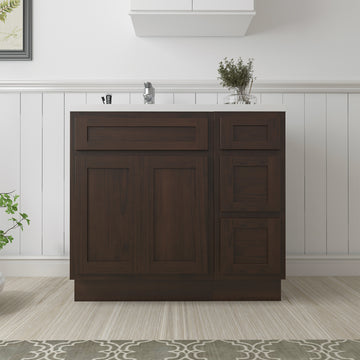
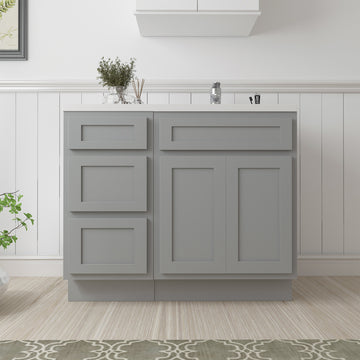
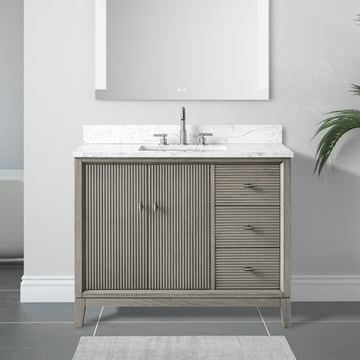
Whether you choose an LED or regular mirror, it should work with your vanity in terms of width, height, and finish. As a general rule, the mirror should be equal to or slightly narrower than the vanity, and positioned so the bottom edge sits roughly 5 to 10 inches above the sink. If you're updating your mirror as part of a larger bathroom refresh, it's worth looking at vanities at the same time to make sure everything coordinates. You can also browse vanity sets with mirror if you want a matched pair without the guesswork.
Frequently Asked Questions
Do LED mirrors need a special electrician to install?
Hardwired LED mirrors need to be connected to your home's electrical system by a licensed electrician, especially if there's no existing wiring behind the mirror location. If you're choosing a plug-in LED mirror and there's already an outlet within reach, you may be able to install it yourself. Always check local codes before doing any electrical work.
How long do the LEDs in a bathroom mirror actually last?
Most LED mirrors are rated for 50,000 hours of use. At two hours per day of use, that's roughly 68 years. In practice, the mirror's other components — switches, defogger, or dimmer circuitry — may need attention before the LEDs themselves fail. Reputable brands offer warranties, typically ranging from one to five years.
Can I use an LED mirror in a small bathroom?
Yes. LED mirrors are available in sizes starting around 20 inches wide, which works well in compact powder rooms or small bathrooms. In a small space, an LED mirror can actually replace both the mirror and the vanity light bar, freeing up wall space and reducing visual clutter. Just make sure the mirror size is proportional to your vanity and sink.
Ready to make the switch? Browse the full selection at LED mirrors from VanityArt to find the right size, finish, and feature set for your bathroom.